
 go to the original language article
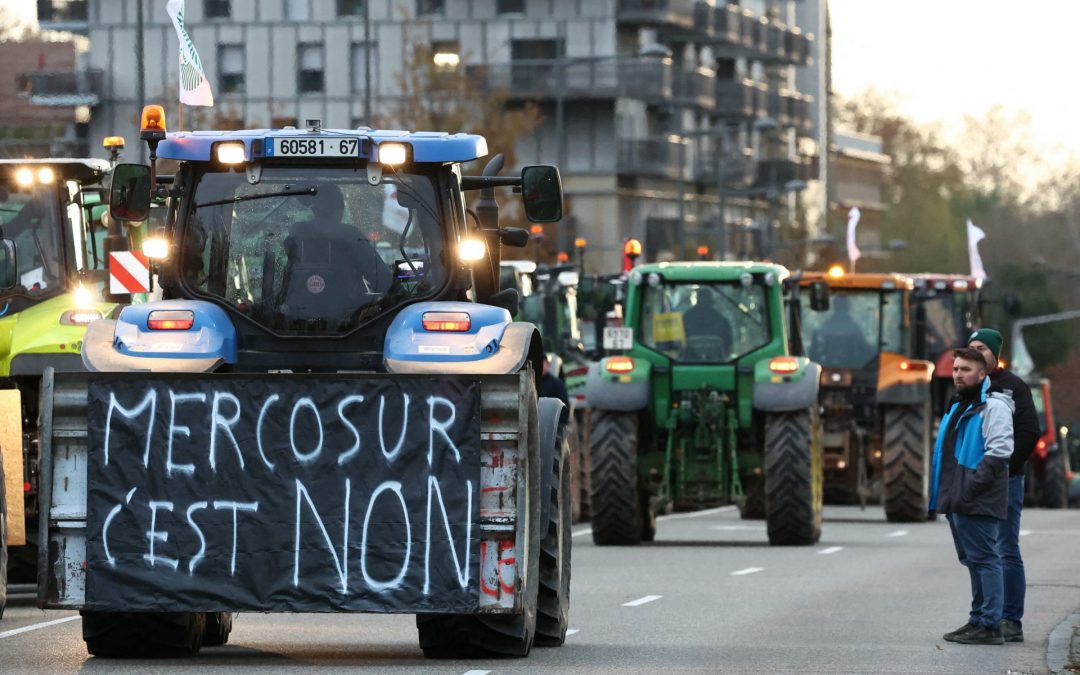
The European Commission negotiated for years with Argentina, Brazil, Paraguay and Uruguay on a free trade agreement that would create the largest free trade zone in the world. It concluded the negotiations at the end of last year, but the European member states and the European Parliament still have to give the green light for provisional entry into force.
However, the deal is particularly sensitive for the European agricultural sector, which fears unfair competition from the South American trade bloc. EU member states France, Italy and Poland are therefore reluctant towards the treaty. A qualified majority is needed for provisional entry into force. To block the agreement, at least four member states representing at least 35 percent of the European population must vote against it.
Enthusiasm is also limited in Belgium. The Walloon government opposes the Mercosur agreement; at the federal and Flemish levels there is no consensus among the coalition partners. Because unanimity among all the country’s governments is required to adopt a Belgian position, Belgium will have to abstain in the European vote. This was once again officially established on Tuesday during a meeting between the different governments.
According to federal Minister of Agriculture David Clarinval (MR), whose party leads the Walloon government, Mercosur is indeed beneficial for most industries and for agricultural sectors such as dairy and potatoes, but “at the same time we are aware that other sectors, such as sugar or beef, may experience more negative consequences, despite the envisaged safeguard clauses”.