
 go to the original language article
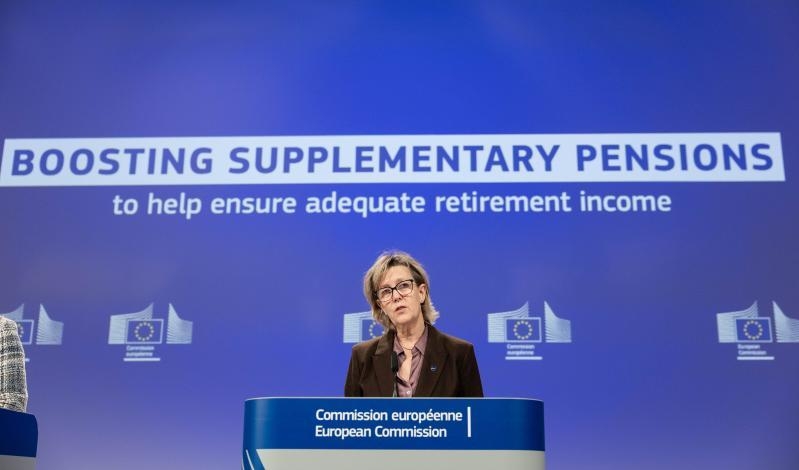
The Commissioner for Financial Services and the Capital Markets Union, Maria Luís Albuquerque, considered today that tax benefits are important to promote the adherence of citizens and companies to pension funds that complement the public system.
“We know that the behavior of individuals or companies is greatly influenced by the incentives or stimuli that are given and that tax incentives are efficient and effective,” said Maria Luís Albuquerque to journalists on the sidelines of the conference of the Insurance and Pension Funds Supervisory Authority (ASF), which took place today in Lisbon.
The politician recalled that the tax issue is part of each country’s sovereignty, but said that the European Commission recommends that there be tax incentives to promote long-term investment, particularly in private pension funds that complement public pension systems.
In the Financial Services and Capital Markets Union portfolio, Maria Luís Albuquerque (former Finance Minister in the PSD/CDS-PP Government of Passos Coelho) has argued that European citizens should invest more in long-term savings products as they can generate more return even if they are riskier.
Today, at the ASF conference, the Commissioner returned to the topic, considering that “for too long long-term savings have been marked by an excessive aversion to risk” and that investing in complementary retirement systems is “a central issue of citizenship, well-being and shared prosperity” since public systems “will hardly guarantee adequate income levels in retirement for everyone.”
For the Commissioner, in order for there to be more investment in these products it is important that there be market reforms that make them more attractive.
Among the obstacles, she said, is the “excessive fragmentation” of the complementary pension market (which complements the public pension), the “unnecessary complexity and the lack of comparability between products”.
For the Commissioner, strengthening complementary pension systems would also mean strengthening the European economy as it “can provide stable and predictable capital for essential and strategic projects: from the energy and digital transition, to strengthening defense and security capacity, to transport networks, and social infrastructure such as hospitals, schools or affordable housing.”
Pension funds invest in financial products (such as shares or bonds) to generate returns, so more money invested there means more capital invested in capital markets, which the European Commission considers would benefit the European economy.
On occupational pension funds, Maria Luís Albuquerque said that many schemes of these pension plans “remain too small and fragmented” and that the European Commission wants to review these schemes to foster economies of scale, limit costs and strengthen investment capacity.
Also on the sidelines of the conference, Maria Luís Albuquerque was asked whether there are no risks in Brussels promoting that Europeans’ savings be channeled into capital markets as they become more subject to losses in the event of crises.
Maria Luís Albuquerque said that “no one suggests that people take all the money out of deposits” to put into riskier investments and that what they should not do “is put all their eggs in one basket,” considering that history shows that in the long term this investment generates more return.
The Commissioner also said that there should not be minimum amounts for investment in complementary pension products so that even those with low wages can save regularly.
Regarding the meeting she had today with the Minister of Labour, Maria do Rosário Palma Ramalho, Maria Luís Albuquerque did not disclose what they talked about, noting that it is usual to have meetings with the governments of the Member States.