
 go to the original language article
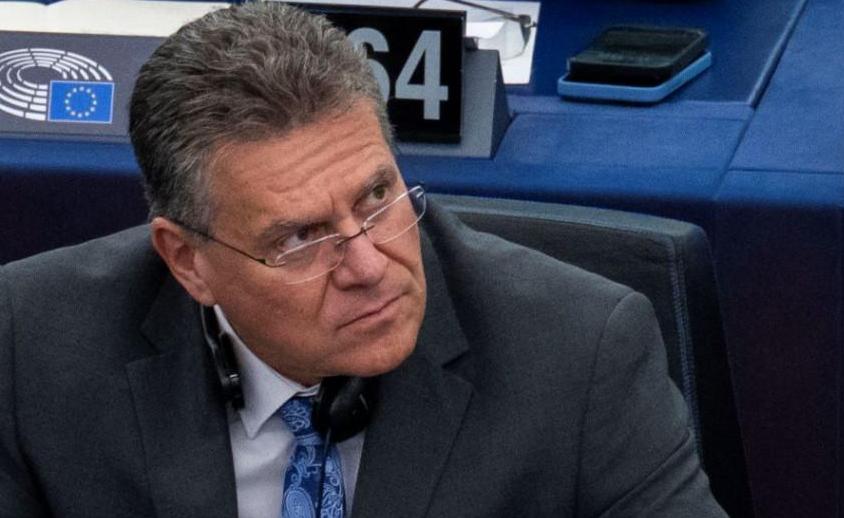
Limassol – The Cypriot Presidency of the Council of the European Union (EU) is willing to help the European Commission (EC) in achieving its trade and economic objectives. EU Commissioner for Trade and Economic Security Maroš Šefčovič stated this for TASR’s correspondent on Thursday after a joint meeting of the College of Commissioners with members of the Cypriot government, chaired by EC President Ursula von der Leyen and Cypriot President Nikos Christodoulides in Limassol.
Maroš Šefčovič expressed satisfaction that the European Commission and the incoming Cypriot Presidency agree on two fundamental priorities. First and foremost, this concerns European economic security, where concrete steps must be taken to ensure this security, whether through better information sharing between Member States and EU institutions or through the creation of a European network of national advisers for economic security.
“And then, of course, there are negotiations with our trading partners. On the one hand, cooperation on completing the ratification of the agreement with the Mercosur countries, which is to be signed this weekend; then, of course, there is great interest in concluding the agreement with India, but it is also about speeding up negotiations with the Gulf countries, since Cyprus knows this geographical area very well,” Šefčovič explained.
He confirmed that the EC will also need the help of the Cypriot Presidency to speed up the ratification of the trade agreement with Mexico, because it is a very important global player in terms of imports of food and agricultural commodities.
In April, the Cypriot Presidency will prepare an extraordinary summit focused on the Mediterranean agreement, to which it will invite leaders from the Middle East and North Africa. The Cypriot president emphasized the importance of the summit for strengthening not only security and migration interests, but also the Union’s trade relations.
“We in the European Commission believe that for cooperation between countries and for businesses it is better if barriers are reduced, and not the other way around, if we operate in a space that is clearly defined by internationally recognized rules and with respect for international trade law,” Šefčovič said. He added that the EC therefore supports every activity that would lead to reducing barriers and to mutually beneficial trade in the sense that it will also increase opportunities for European producers and traders to open new contacts and business relations. (15 January)
“There is also interest in speeding up negotiations with the Gulf countries, since Cyprus knows this geographical area very well.” Maroš Šefčovič