 go to the original language article
The European Commission today chose, as future “Energy Highways” that will receive support from the European Union (EU), electrical interconnections from the Pyrenees with the Iberian Peninsula and a hydrogen corridor from Portugal to Germany.
“The ‘Energy Highways’ initiative will address eight key bottlenecks across Europe, which represent the most urgent needs in terms of energy infrastructure,” the European executive announces in a statement.
At stake are, first and foremost, projects such as electrical interconnections through the Pyrenees for better integration of the Iberian Peninsula, as well as a southwestern hydrogen corridor, which will connect Portugal to Germany.
The initiative “responds to the most urgent infrastructure needs, which require additional short-term support and a commitment to their implementation,” so the projects “were selected based on their strategic importance for completing the Energy Union and on the level of EU political support needed for their successful implementation,” the institution explains in the note.
“Each project will be prioritized at EU level and the Commission will support the Member States so that they assign them the same priority at national level,” it further guarantees.
Last week, the institution chose two electricity and hydrogen corridors that cover Portugal as projects of common and mutual interest to receive EU support.
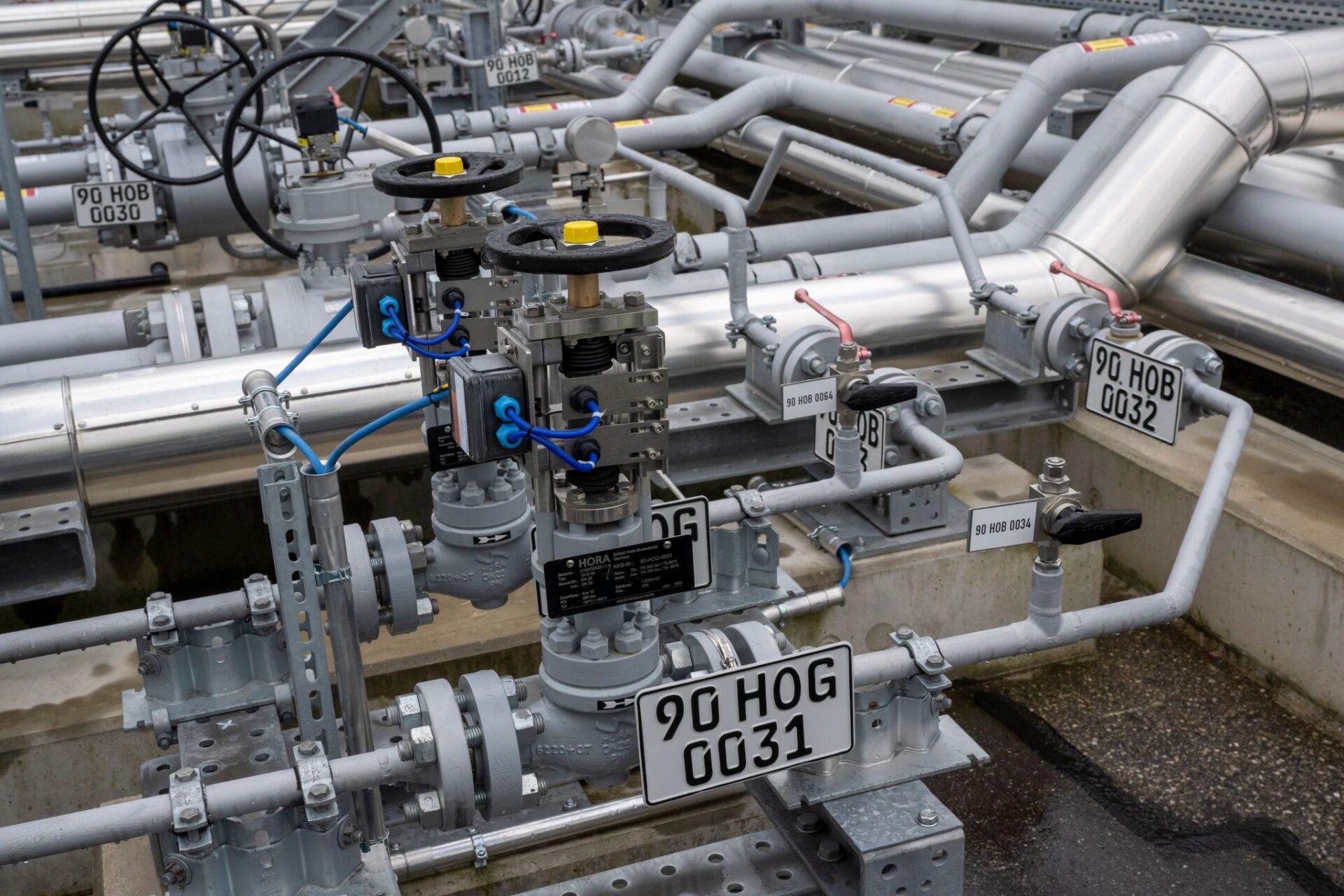
These concern a project relating to the electrical interconnection between Portugal and Spain (passing through Ponte de Lima, Vila Nova de Famalicão, Beariz and Fontefría) and another hydrogen interconnection between Portugal, Spain, France and Germany (namely an internal hydrogen infrastructure in Portugal and a hydrogen interconnector between Portugal and Spain and other links).
Questioned today by Lusa at a press conference in Brussels, the European Commissioner for Energy, Dan Jørgensen, declined to indicate deadlines for the completion of these two projects, but assured that “the work does not start today” and that the institution is “in dialogue with the governments involved in all these projects.”
“The timeline is different from project to project, as are the challenges,” he said only.
When asked about the blackout that occurred last April, Dan Jørgensen highlighted the “great solidarity shown towards Spain and Portugal.”
“If, in the future, we want to maintain our energy security and avoid blackouts, the answer is more connections and these eight projects are definitely a big step in the right direction,” he added.
The European Commission shares Portugal’s view on the need to build more energy interconnections in the EU, namely between the Iberian Peninsula and the rest of the bloc, and is trying to engage in dialogue with France.
The blackout in the Iberian Peninsula last April showed the importance of increasing the resilience of the EU’s energy grid, at a time when the Iberian territory has connectivity below 3% with the rest of the Union.
The Portuguese Government has been advocating an increase in Portugal’s energy interconnection with the rest of the EU to 15% by 2030, through the construction of more interconnections.
The EU has precisely set an interconnection target of at least 15% by 2030.
The strengthening of energy interconnections between Portugal and Spain and the EU has been discussed for several years, but due to France’s skepticism this has never fully advanced, despite being important for increasing energy security, reducing dependence on fossil fuels, lowering costs and facilitating the transition to renewable energy.
Brussels wants Iberian interconnections and a hydrogen corridor from Portugal to Germany
The Iberian territory has energy connectivity below 3% with the rest of the EU