
 go to the original language article
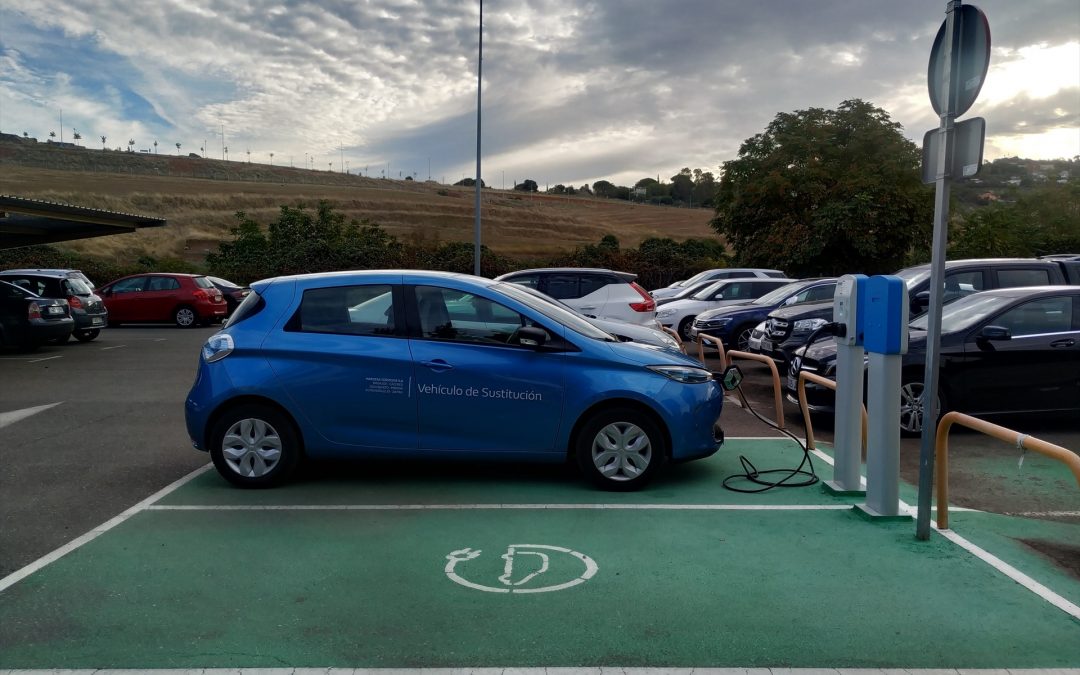
Brussels – The future European regulation on electric cars in company fleets could make Spain the third country to benefit the most from the “Made in the EU” clause that is expected to be included in the new legislation to boost sales of zero-emission vehicles, according to an analysis by the NGO Transporte y Medioambiente (T&E, by its initials in English).
The company car market represents around 60% of new passenger car sales in the EU and the European Commission is finalizing a proposal, expected to be presented next Wednesday, to establish electric quotas in corporate fleets to boost the penetration of zero-emission vehicles.
“One of the options on the table is to link the new minimum electrification percentages with ‘Made in EU’ (manufactured in the European Union) requirements,” a spokesperson for Transporte y Medioambiente told EFE, recalling that “Spain and France presented a joint position last month in which they established this type of requirement as necessary in the review of European legislation.”
According to that NGO, incorporating into the law an objective that companies with more than 250 employees electrify 75% of their new acquisitions in 2030, together with the requirement that at least 90% of those vehicles be manufactured in the EU, would generate additional demand for 1.2 million European electric cars between 2027 and 2030.
For Spain, again according to that platform, the impact would be especially significant since 74% of the electric vehicles produced in the country are sold to European corporate fleets.
The Spanish industry places on the European corporate market electric models manufactured in plants such as Stellantis Vigo (ë-Berlingo, e-Partner, Combo-e and ProAce City Electric vans) and Stellantis Zaragoza (which assembles the Corsa-e) and, from 2026, the electric models that Volkswagen and SEAT plan to manufacture in Martorell and Navarra, such as the ID.2 and the future Cupra Raval, will be added.
This means that the Spanish automotive industry would become the third most aligned with this corporate sales channel that the future proposal of the European Commission intends to strengthen, only behind Austria (80%) and Belgium (75%).
If the EU introduces local content requirements, Spain would become one of the main recipients of the expected increase in demand, with a direct effect on production and employment in domestic plants, according to T&E.
The study also stresses that, although most States offer more generous tax incentives to companies than to individuals – in 23 of the 27 countries, with examples of up to 14,000 euros per car in Germany – only three Member States (Belgium, Luxembourg and the Netherlands) currently show clear corporate market leadership in electrification.
Spain, together with France, Germany and Italy, remains lagging behind, which reinforces the need for a mandatory European framework, according to T&E, which recalls that Spain, France, Sweden, the Netherlands, Ireland and Luxembourg have sent a letter to the European Commission asking it not to delay the presentation of the proposal.
The signatories supported their request on the grounds of the benefits it would bring for European competitiveness and how positive it would be for the second-hand market.
Since corporate vehicles are used for less time than private ones, up to 7 million electric vehicles could reach the secondary market in 2035 thanks to this law, according to T&E estimates. (December 5)