
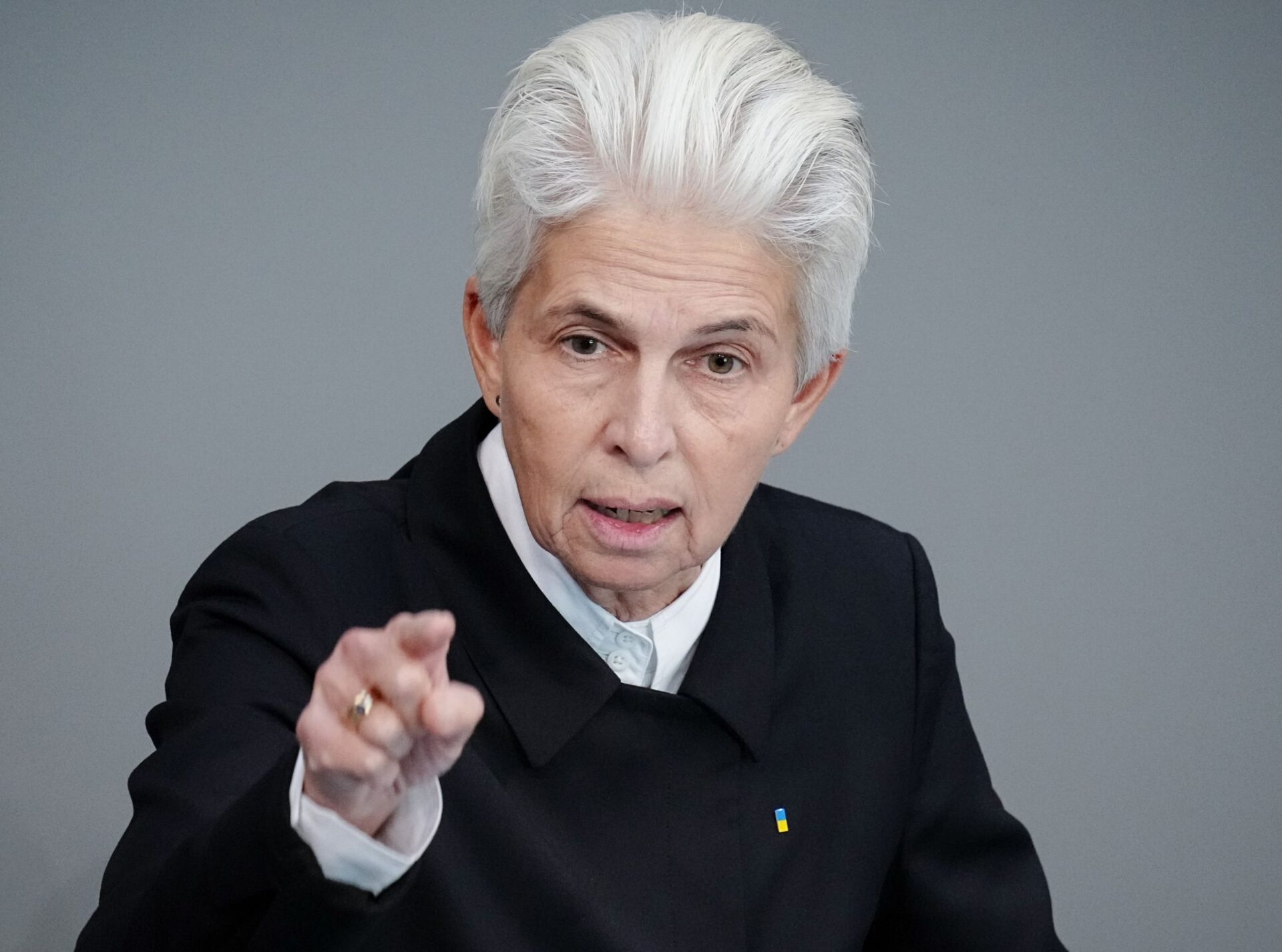
The EU should not accept any cuts to the proposed allocation of funds to defence and security in the next long-term EU budget, German MEP Marie-Agnes Strack-Zimmerman said in Strasbourg on Wednesday.
“Without security, we have no discussion anymore about anything,” the chair of the European Parliament’s committee on defence and security (SEDE) told the European Newsroom (enr) on the sidelines of Parliament’s plenary session.
The European Commission has proposed €131 billion for investment in defence, security and space under the European Competitiveness Fund in the EU’s 2028–2034 budget. This represents a five-fold increase compared with the current budget period.
Asked what compromise she would accept on the size, funding or allocation of defence spending to secure a budget agreement, Strack-Zimmermann said: “We need everything without compromises.”
The next long-term budget requires unanimous agreement among EU member states and the European Parliament’s consent.
Support for Ukraine
Strack-Zimmermann accused Russia of trying to deter European leaders from visiting Kyiv and undermine their support for Ukraine following attacks during German Chancellor Friedrich Merz’s visit last Sunday.
Asked about accelerating deliveries to Ukraine to defend itself against Russia’s war of agression, Strack-Zimmermann said funding was available but action required approval from national governments.
Ukraine needed humanitarian, military and economic assistance, including money to produce more weapons to protect its people, she said.
All in on SAFE
Strack-Zimmermann urged countries to move faster on joint defence procurement, backing the EU’s Security Action for Europe (SAFE) instrument.
SAFE provides up to €150 billion in competitively priced loans to member states aimed at accelerating large-scale investment in critical capabilities.
“We have more than 150 different weapons systems and to protect Europe we need this SAFE program,” the German politician said.
She said the programme had attracted interest both within and outside the EU. According to the European Commission, 19 EU member states have submitted defence investment plans, such as France, Italy and Poland, but not Germany.
The first non-European country to participate in SAFE was Canada, which concluded an agreement with the EU in June.