
 go to the original language article
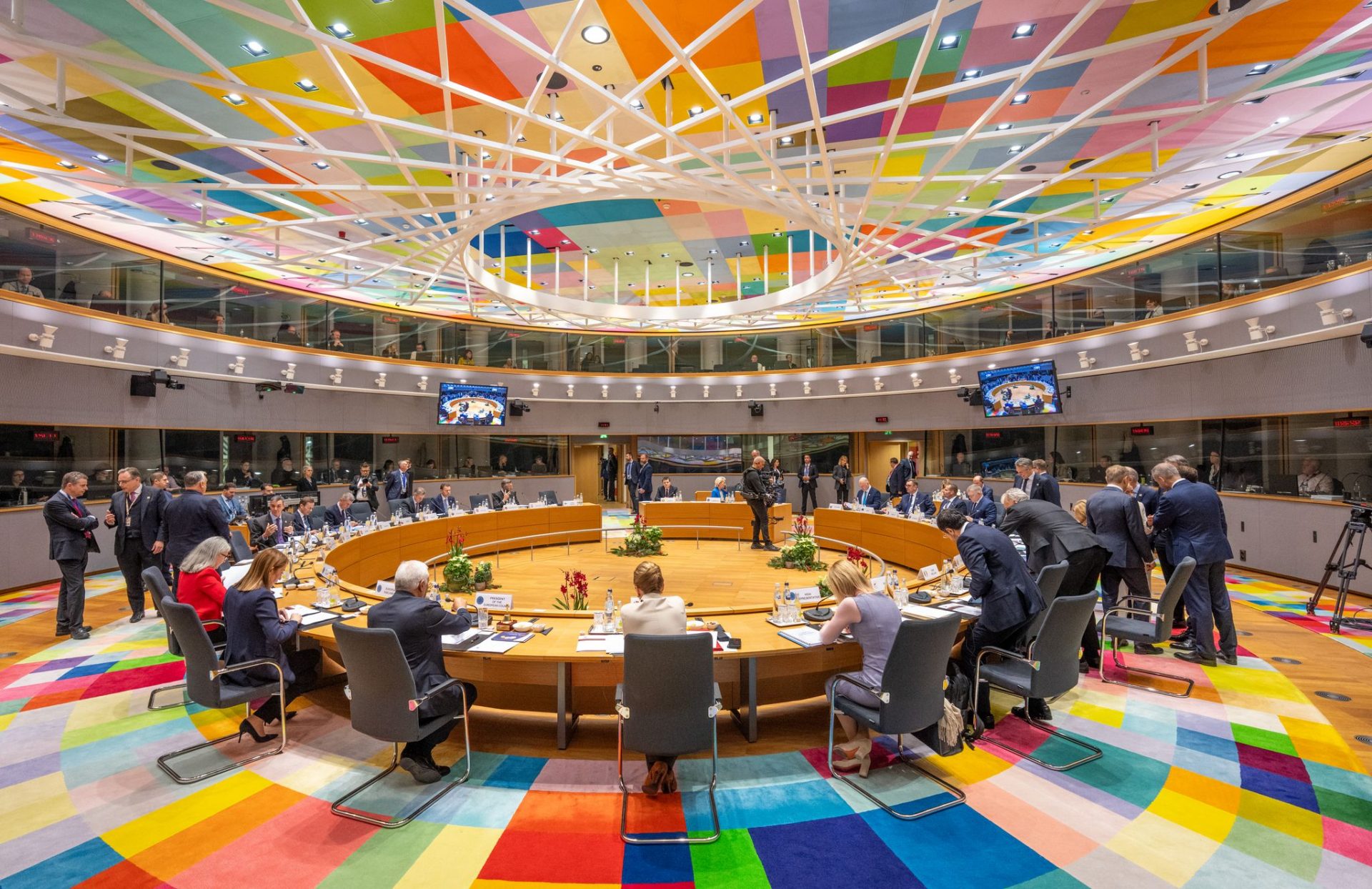
BRUSSELS – The European Council adopted, at the EU summit held on 18 December, conclusions covering all the issues discussed at the summit – Ukraine, EU enlargement, the situation in the Middle East, defense and security, migration, and the war against disinformation. As stated in the document, a strategic discussion was held at the summit on the future course of enlargement, including aspects related to internal reforms, during which the importance of enlargement as a geostrategic investment in peace, security, stability and prosperity was emphasized.
As highlighted in the document, it is a driver of improved economic and social conditions for European citizens, of reducing disparities between countries, and it must nurture the values on which the Union is founded. “Looking ahead to the prospect of further enlargement of the Union, both future Member States and the EU must be ready at the time of accession. Countries aspiring to membership must continue their reform efforts, especially in the area of the rule of law, in line with the merit-based nature of the accession process and with the support of the EU. In parallel, the Union must put in place the necessary internal foundations and reforms, which will strengthen the European Union and reinforce European sovereignty,” the conclusions state. At the same time, as the enlargement process advances, the European Council calls on the Commission to present its detailed policy reviews so that this work can progress in parallel. Regarding Ukraine, the conclusions state that a loan to Ukraine of 90 billion euros has been approved for 2026–2027, based on EU borrowing on the capital markets, backed by EU budget headroom, noting that any mobilization of Union budget funds as a guarantee for this loan will not affect the financial obligations of the Czech Republic, Hungary and Slovakia. Concerning the situation in the Middle East, the European Council welcomed the adoption of United Nations Security Council Resolution 2803 on the establishment of a Peace Committee and temporary International Stabilization Forces, as set out in the Comprehensive Plan to end the conflict in Gaza, and calls on all parties to implement the Resolution in full and in accordance with relevant international political and legal principles.
In this context, it is stated, the European Council reaffirms the EU’s strong commitment to international law and to a comprehensive, just and lasting peace based on a two-state solution in accordance with relevant UN Security Council resolutions, where two democratic states, Israel and Palestine, live side by side in peace within secure and recognized borders. It also condemns the massive increase in settler violence against Palestinian civilians and calls on the Government of Israel to comply with its obligations under international law and to protect the Palestinian population of the occupied territories. The European Council also calls for de-escalation in the wider region and stresses the need to preserve stability in Lebanon, and calls for the complete disarmament of Hezbollah and other non-state armed groups in Lebanon. Regarding Syria, the European Council reiterates its support for a peaceful and inclusive transition in Syria and stresses the importance of protecting the rights of Syrians of all ethnic and religious backgrounds without discrimination. The conclusions strongly condemn all recent hybrid attacks on the European Union and its Member States and, in light of the intensified hybrid campaign by Russia and Belarus, call for accelerated efforts to strengthen resilience, protect critical infrastructure and prevent, deter and respond to hybrid attacks across the Union, using all relevant policies and instruments, including further restrictive measures against those countries. In the document, the European Council welcomes the adoption of the Regulation on stimulating defense-related investment in the EU budget and the presentation of the Defense Industrial Transformation Plan, and also calls for intensified work in all areas identified in October 2025, and for the co-legislators to give priority to continuing work on relevant legislative proposals, such as the Defense Readiness Omnibus and the recent proposal to facilitate military mobility.
The Council expressed its deepest condolences to the families and friends of the victims in Sydney, at Bondi Beach, and stands in solidarity with Australia and Jewish communities around the world. It reiterates its strongest possible condemnation of all forms of antisemitism and hatred, intolerance, racism and xenophobia, including hatred against Muslims, and calls on the European Commission and Member States to step up monitoring of the Council Declaration on fostering Jewish life and combating antisemitism of 15 October 2024, including the protection of Jewish institutions. The importance of strengthening Europe’s democratic resilience was also highlighted, and the need to counter disinformation and foreign information manipulation and interference (FIMI) and to protect free and pluralistic media was emphasized. “The European Council calls on the Commission, in cooperation with the Member States, to develop an EU macro-regional strategy for the Atlantic by June 2027, taking into account the existing Atlantic Maritime Strategy and the Atlantic Action Plan,” the adopted document concludes. (19 December)