
 Have the article read by OpenAI (Beta). Please note that AI translations may take some time to process.
The United States’ push to ram through a plan for peace in Ukraine has amped up calls for the European Union to take a decision soon on using Russian frozen assets to fund Kyiv while also finding its way to the negotiating table.
Washington’s 28-point proposal to halt the war would have seen Kyiv withdrawing from territory it still controls in its eastern Donetsk region and the US de facto recognising the Donetsk, Crimea and Lugansk regions as Russian.
On Tuesday, the Russian President Vladimir Putin rejected changes proposed by Kyiv and Europe to the initial US 28-point peace plan. He also said Russia does not intend to start a war with Europe. “But if Europe suddenly decides to fight and starts it – then we are ready right now,” he said.
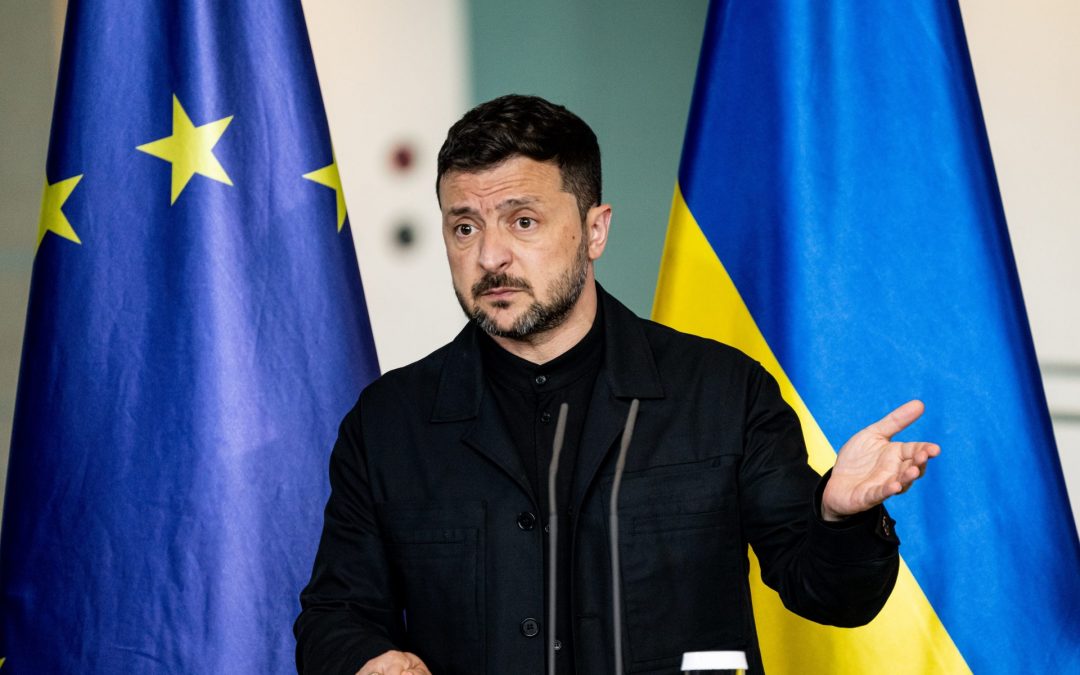
Ukrainian President Volodymyr Zelenskyy was seeking support from European allies, who feared that the US plan – drafted without input from Kyiv or Europe – reads like a wishlist for Moscow.
The diplomatic push comes as the war, which has killed tens of thousands of civilians and military personnel and has displaced millions of Ukrainians, shows no sign of easing.
Almost four years into Russia’s large-scale offensive in Ukraine, an analysis by Agence France-Presse (AFP) of data from the US-based Institute for the Study of War (ISW) showed that the Russian army last month made its biggest advance in Ukraine since November 2024.
The situation for Kyiv has been further complicated by a corruption scandal that has rocked Zelenskyy’s inner circle and forced the dismissal last week of his top negotiator and chief of staff, Andriy Yermak.
Meanwhile, the EU not only scrambles for a seat at the negotiating table, but some member states are pressing for the bloc to tap immobilised Russian central bank assets to provide Kyiv with a “reparations loan”.
No peace without Ukraine and Europe
The European Union’s chief diplomat, Kaja Kallas, said on Monday that peace efforts to end Russia’s war in Ukraine could enter into a decisive phase after a new round of talks between the US and Ukraine over the weekend.
“It could be a pivotal week for diplomacy,” Kallas told journalists in Brussels arriving at a meeting of EU defence ministers on Monday.
On Tuesday, US envoy Steve Steve Witkoff and Russian President Putin met in Moscow. According to media reports, a Putin aide called the talks “constructive” but no significant breakthroughs on a peace deal were made.
Europe has been largely sidelined by the United States in US President Donald Trump’s drive to bring an end to the Kremlin’s war in Ukraine.
“Even though peace negotiations are underway, I see no signs of Russia’s willingness to stop the hostilities in Ukraine. This must be taken into account so that Europe is not left behind on the sidelines looking naive,” said Denmark’s Defence Minister Troels Lund Poulsen, whose country currently holds the rotating EU presidency.
Zelenskyy said on Monday that it was “not fair” to exclude European allies from Ukraine reconstruction talks, as efforts to settle the war with Russia went into full swing.
The two largest EU economies, France and Germany, are leading a push for European input.
French President Emmanuel Macron said that a plan between Russia and Ukraine to end hostilities can only be finalised with the involvement of Kyiv and European powers. His German counterpart, Chancellor Friedrich Merz, also said that there must be “no dictated peace” in Ukraine and that Kyiv and its European allies must be involved in any deal to end the war.
Poland’s Prime Minister Donald Tusk reiterated that European leaders are committed to achieving a just and lasting peace for Ukraine. “That much is obvious. We will continue to support Ukraine. Its collapse would pose a direct threat to Poland. I hope this is finally understood by everyone, especially in Poland.”
Within the EU there have been calls to appoint either European Commission President Ursula von der Leyen, EU foreign policy chief Kaja Kallas, or both, to negotiate peace on behalf of the EU – but not everyone believes the EU should participate at this stage.
Slovakia’s President Peter Pellegrini believes that other world powers must first agree before the EU enters the process. According to him, the bloc is currently not perceived as a strong and relevant superpower given its condition and political leadership.
Dutch Minister of Foreign Affairs David van Weel also said he does not consider it necessary to have one or two people speak on behalf of the EU about peace in Ukraine. Van Weel has previously stated that “what’s important for us is that whatever peace plan is on the table, Ukraine is behind it”.
Russian frozen assets dominate EU discourse
The US’ 28-point peace plan for Ukraine also suggested essentially unfreezing some 200 billion Euro of Russian central bank assets held in the EU and handing part of the money over to the US and the Kremlin.
For many EU leaders, that went well beyond the pale – and they quickly pressed Trump to drop the demand. “The Europeans are the only ones who have a say on what we will do with the frozen Russian assets held in Europe,” French President Macron hammered home on Tuesday.
Fuelling the alarm was the fact that the US proposal came out just as the EU was debating a plan to use the frozen assets that are immobilised in Belgium to fund a 140-billion Euro loan for Ukraine.
EU foreign affairs chief Kallas reiterated the EU’s position: the bloc needs to increase the pressure on Russia through sanctions on Moscow and by agreeing on making Russian state assets frozen under EU sanctions available to Kyiv as a loan.
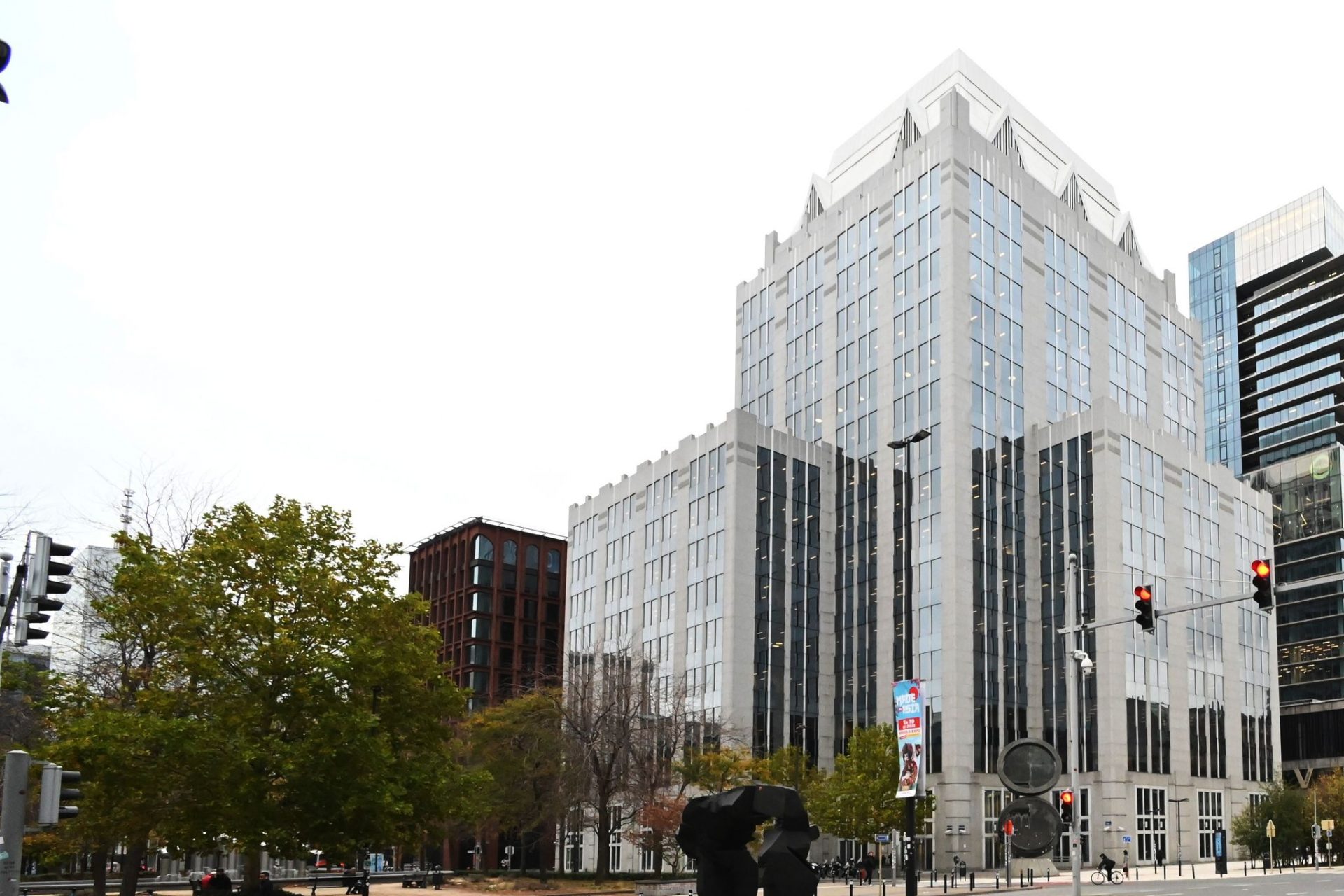
According to European Union data, the EU has immobilised around 210 billion Euro of Russia’s sovereign assets – most of which is held by Euroclear, a financial services company headquartered in Belgium. Euroclear’s report on its 2024 annual results states that it holds 183 billion Euro of these assets.
The proposed EU “reparations loan” envisages that Ukraine would only pay back the funds once Russia had coughed up for the damages inflicted by its invasion.
The European Central Bank (ECB) said Tuesday that it cannot backstop the EU plan, casting further doubt on a push to agree the move this month. According to the Financial Times, the European Commission had asked the ECB whether it could act as a lender of last resort to Euroclear to avoid a liquidity crisis, citing people briefed on the discussions – but the central bank for the 20-nation eurozone said this was impossible “as it would likely violate treaties on prohibiting monetary financing”.
Belgium has been voicing concerns about the financial and legal risks of using the immobilised assets, most of which are held at Euroclear in Brussels.
Last week, Belgian Prime Minister Bart De Wever reiterated his concerns in a letter to the president of the Commission, in which he called the loan scheme “fundamentally wrong”. According to him, using the assets would violate “a fundamental principle of international law” and create instability in global financial markets.
Countries with significant reserves in Europe might choose to withdraw them, De Wever said, even if the EU maintains that the plan does not amount to unlawful seizure.
There is a real risk that the EU would ultimately be forced to repay the funds, De Wever also wrote in the letter. That would require guarantees from member states. He also argues that countries hosting frozen assets should all contribute to the plan, not only Belgium.
For example, Bulgarian Prime Minister Rosen Zhelyazkov said that the Russian assets frozen in Bulgaria are not part of the guarantees for Ukraine’s loan. “Regarding the so-called Russian assets, these are financial funds deposited in the European Central Bank and blocked by Euroclear. In Bulgaria, if there are assets belonging to sanctioned persons or companies, they are not part of this financial pool. They are frozen in Bulgaria, and no transactions can be carried out with them,” the Prime Minister said.
De Wever also warned of possible Russian retaliation, particularly targeting Euroclear and Belgium. He further noted that frozen assets may play a role in future peace negotiations and that using them now could complicate those talks.
Slovenia’s Prime Minister Robert Golob stressed that Slovenia understands Belgium’s position and its expectation of guarantees should these funds be utilised. “On the other hand, it remains true that frozen assets represent the most potent tool in Europe’s arsenal, one that should be deployed with a singular purpose: to achieve peace in Ukraine.”
Poland also endorses the EU’s plan, Deputy Defence Minister Paweł Zalewski has said after the meeting of the EU Defence Ministers in Brussels on Monday.
Portugal’s Finance Minister Joaquim Miranda Sarmento also confirmed the country’s government “supports, from a general point of view” the creation of a loan based on frozen Russian assets. He however pointed out that this “is a complex issue” and that there are still “some technical aspects to be resolved”, not least because Belgium is demanding clear guarantees and commitments from the other European countries.
During a visit of Ukrainian president Zelenskyy to Madrid on November 18, Spanish Prime Minister Pedro Sánchez said he supports the use of Russian frozen assets for the reconstruction of Ukraine. He also announced the mobilisation next month of 615 million Euro out of the 1 billion Euro committed in military aid to Ukraine this year, in addition to 202 million Euro for reconstruction.
In the face of Belgian opposition to the plan, von der Leyen has laid out other options to keep financing Kyiv. The first was to use wiggle room in the EU’s central budget to raise money on capital markets, and the second was that member states jointly borrow the money.
EU officials and diplomats warn that both plans would incur greater costs for countries at a time when national budgets are under strain.
EU leaders are set to discuss at a summit on December 18 whether to use the assets to finance a loan for Ukraine – or find another option to help keep the country afloat.
Editorial note: The title of Spain’s head of government, Pedro Sánchez, was corrected from President to Prime Minister.
This article is an ENR Key Story. The content is based on information published by ENR participating agencies.