
 go to the original language article
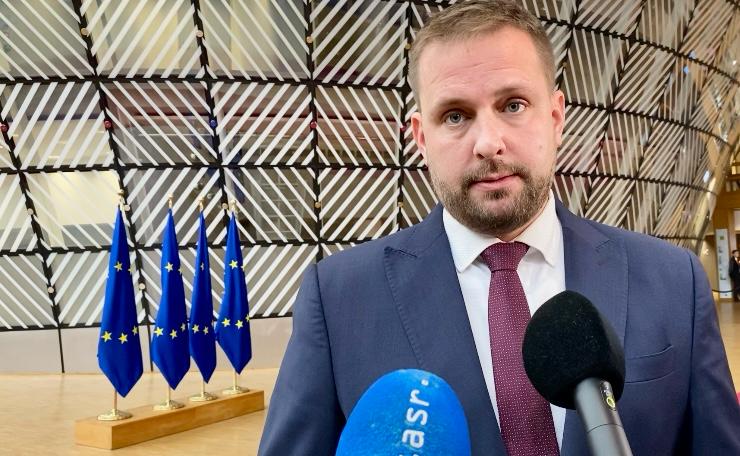
Brussels – After the New Year, Slovakia, together with other Visegrad Four (V4) countries, wants to raise at the EU level the issue of a possible shortage or unavailability of insulin in the Central European region. Minister of Health Kamil Šaško (Hlas-SD) stated this on Tuesday (2 December) after the meeting of the EU Council for Employment, Social Policy, Health and Consumer Affairs (EPSCO) in Brussels, the TASR correspondent reports.
Kamil Šaško recalled that he came to Brussels for talks with European health ministers with the intention of opening a topic he had already spoken about in Slovakia on Monday (1 December), namely the threat of insulin unavailability.
On Tuesday in Brussels, the Council of Ministers focused primarily on the Critical Medicines Act and the preparation of the future long-term EU budget, but Šaško took the opportunity for bilateral talks with the Czech health minister and with the Hungarian delegation. According to him, a meeting with the Polish health minister was also planned, but at the last moment she was unable to attend.
“From my point of view, however, this topic is very important,” said Šaško. He added that Slovakia, which will also discuss this with Hungary as the V4 presiding country, is initiating that as early as the beginning of the year the issue of a possible shortage or unavailability of insulin be raised in Brussels, which is a serious challenge for diabetics from the Central European region.
“I think it is high time we looked at how the EU will ensure for the entire Central European region either the production or the availability of this essential medicine,” Šaško described the situation.
When asked why there is a threat of an insulin deficit, the minister explained that the problem arose with the license holder. He specified that in the Central European region patients are most often set on so-called human insulin and the license holder or insulin manufacturer simply decided that it would gradually end this production.
“And there are few alternatives. It is not about whether it will happen, it will happen. It really is time to act. This was one of the first topics I talked about like this a year ago. We are a year further on and I think it really is a topic that we will certainly raise also at the V4 level so that we are prepared for it, so that our patients have treatment available, the kind they need,” said Šaško. He specified that this issue needs to be addressed separately, apart from the discussions at EU level on critical medicines. (3 December)
“It is high time we looked at how the EU will ensure for the entire Central European region either the production or the availability of this essential medicine.” Kamil Šaško