
 go to the original language article
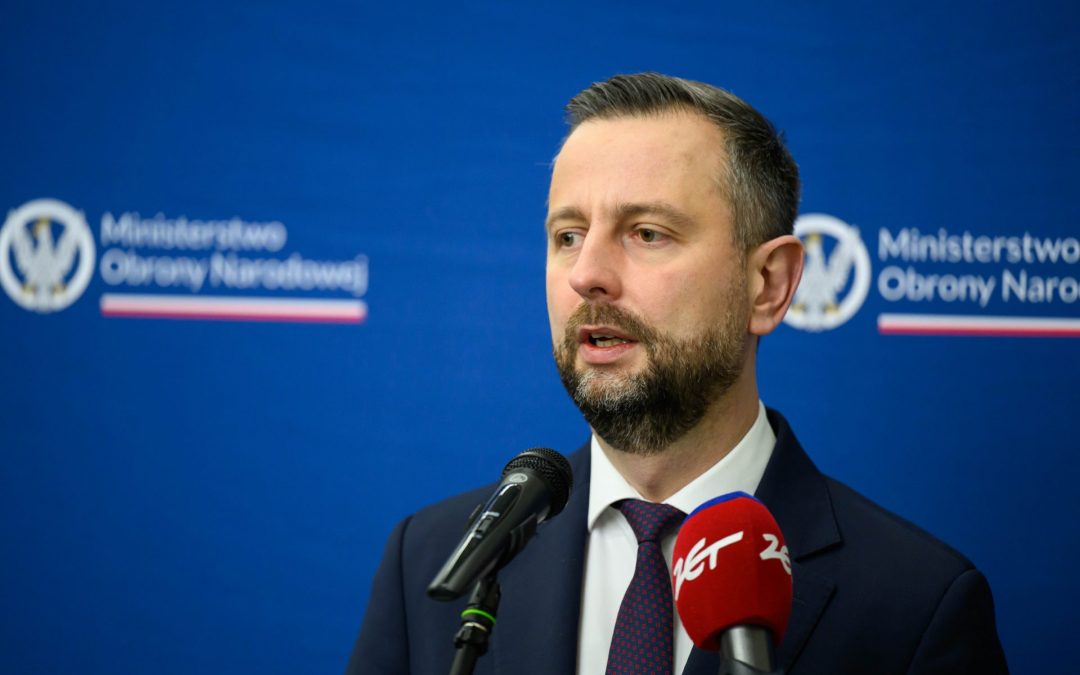
The Deputy Prime Minister, head of the Ministry of National Defence and president of the Polish People’s Party (PSL) Władysław Kosiniak-Kamysz announced on Monday that PSL will continue to conduct an offensive in Brussels against the agreement with the Mercosur countries. On 7 January, the Minister of Agriculture Stefan Krajewski will take part in further talks on this matter.
Politicians of the Polish People’s Party – including the party’s president and the Minister of Agriculture – organized a press conference on Monday together with representatives of farmers’ unions regarding the European Union’s trade agreement with the Mercosur bloc of countries.
Kosiniak-Kamysz stated that the Polish People’s Party was the first political group to oppose this agreement. “From the very beginning we said that one cannot agree to such conditions as are proposed on the one hand by the European Commission, and on the other by the South American states,” said the leader of the People’s Party.
According to him, previous governments accepted the progress of work on this agreement, while politicians of the Polish People’s Party said at the time that it was not a beneficial agreement for reasons of the safety of Polish consumers and farmers. He added that once in government, PSL convinced all the groups forming the current ruling coalition that it was worth changing the policy of their predecessors and not accepting the provisions of the European Council.
Kosiniak-Kamysz declared that PSL will continue to conduct an offensive in Brussels to block the agreement with Mercosur. “On 7 January, the Minister of Agriculture Stefan Krajewski will hold talks on this matter in Brussels. At his request there is also a meeting with the EU commissioners responsible for agriculture and for trade,” emphasized the PSL president.
Krajewski himself said that the meeting organized on 7 January at his request and that of the French Minister of Agriculture Annie Gennevard with the Commissioner for Agriculture and Food Christoph Hansen and the Commissioner for Trade and Economic Security Marosz Szefczovicz is to be devoted to “taking into account all those voices that were heard during the recent protests against the agreement with Mercosur in Brussels.”
“We said that we would do everything to block this unfavourable agreement, and that is what we are doing,” said Krajewski, noting that he has held many talks with agriculture ministers from countries that are also protesting against this agreement.
In Brussels, a discussion is underway regarding the trade agreement between the European Union and the Mercosur countries (Argentina, Brazil, Paraguay, Bolivia and Uruguay). The agreement is to establish tariff preferences for certain agricultural products from these countries, such as beef, poultry, dairy products, sugar and ethanol. In return, the markets of these countries will open up to European industry.
The agreement was to be signed in December 2025, but now January 2026 is being mentioned. In mid-December, demonstrations by farmers from various European countries, including Poland, Italy and France, swept through Brussels. Farmers protested, among other things, against the agreement, fearing that the introduction of preferential tariffs on some agricultural products from Mercosur would hit them.
Last Monday, EU ambassadors decided that the decision on safeguard clauses for farmers in the trade agreement with Mercosur, originally planned for that day, would be postponed to January 2026. According to media reports, the European Union plans to sign the trade agreement with the South American bloc on 12 January.
Earlier, just after the European Union summit in Brussels, Prime Minister Donald Tusk told journalists that Poland would maintain its negative position on the agreement. He added that postponing the signing of the agreement until January would give the European Commission time to develop additional safeguards. (29.12.2025).