
 go to the original language article
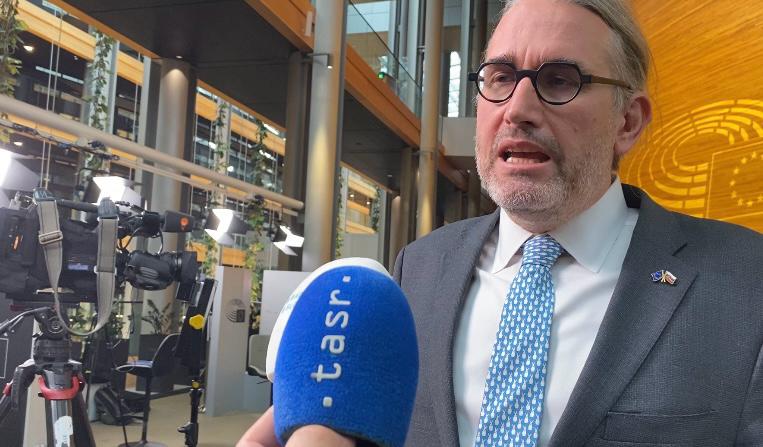
Brussels – The European Commission (EC) on Tuesday (16 December) presented the European action plan for affordable housing. In the European Parliament, this topic is being addressed by a special committee on the housing crisis (HOUS), which includes two Slovak MEPs – Martin Hojsík (PS) and Monika Beňová (Smer-SD), reports TASR’s correspondent.
The European Commission wants to ensure better access for EU citizens to affordable, sustainable and quality housing.
“Having a home is the foundation for family and quality of life. Unaffordable housing threatens the future of young people in Slovakia and throughout the EU. In Bratislava, an average young person would have to save their entire salary for almost 24 years to be able to afford a 75-square-metre flat,” warned EP Vice-President Martin Hojsík.
According to him, it is therefore high time that the EU and its institutions also seek common European solutions to this problem.
The EC’s proposals for affordable housing are not perfect, but they are going in the right direction
“I am glad that after several years of my efforts, the European Commission has finally put these proposals on the table. They are not perfect, but they are going in the right direction,” he said. He specified that the key will be better involvement and access to financing for the construction of rental housing for municipalities, digitalisation and speeding up of permitting, prioritising the use of underused or neglected properties in cities over the occupation of agricultural land, as well as less bureaucracy in the use of new ecological materials that reduce costs for builders. These are, in his words, proposals that will help make housing more affordable for everyone.
Monika Beňová pointed out that apartment prices and rents are rising faster than wages across Europe; since 2010, housing prices in the EU have increased on average by more than 50 percent and rents by a quarter.
“For young people, young families or workers in cities, housing is becoming an unaffordable luxury. This problem has long ceased to be only economic; it has also become social. The Commission admits that the housing market is failing and is coming up with a plan to support affordable housing. It speaks of greater investment in the construction and renovation of apartments and of easing state aid rules so that states and cities can act more quickly and flexibly. For Slovakia, this is an important signal. Brussels finally realises that housing cannot be left exclusively to the free market,” she said.
According to her, one of the main obstacles to housing construction is bureaucracy, as the tangle of European and national regulations prolongs permitting processes, increases costs and discourages smaller construction companies. She argues that the EU must move towards simpler rules and faster decisions.
She considers the effort to involve regional and development banks in financing social and rental housing to be interesting. “However, Europe is hesitating over large public investments. Yet it is precisely these that could bring a rapid and tangible change. Housing is not just an ordinary commodity; it is a basic necessity of life,” she said. The EC’s proposal to better monitor property prices and ownership relations in order to prevent speculation is, in her view, also interesting for Slovakia. (17 December)