
 go to the original language article
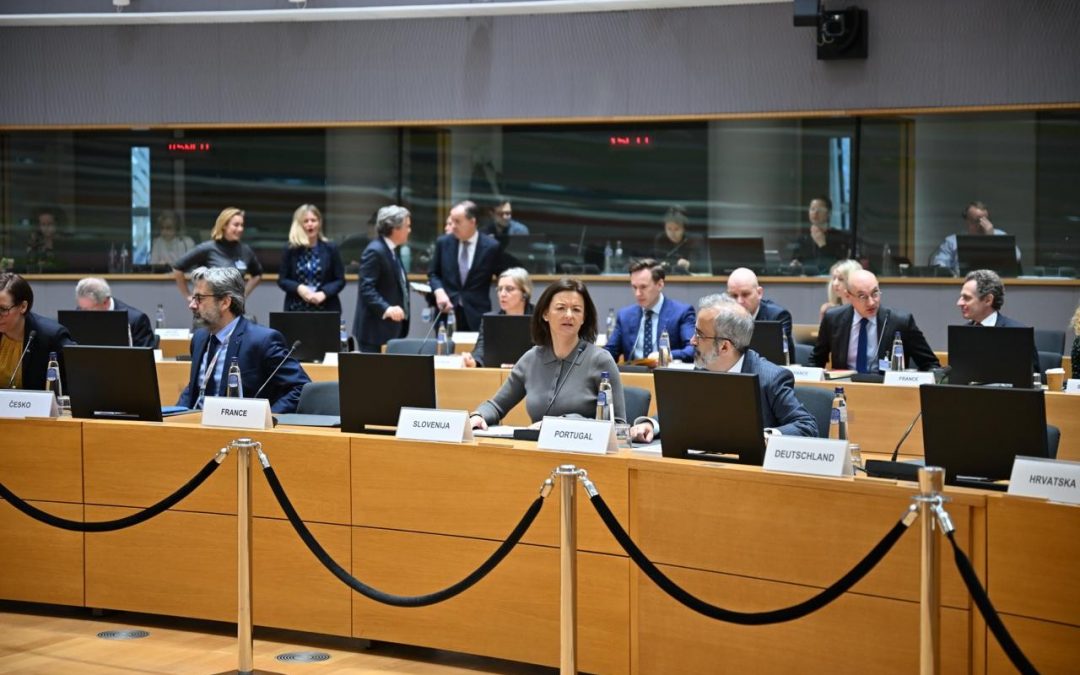
Brussels – Slovenia will support only a legally and fiscally sustainable solution for financing further EU support to Ukraine, said Slovenian Foreign Minister Tanja Fajon during talks among member states on the use of frozen Russian assets to finance a loan to Kyiv. She herself believes that transitional loans guaranteed by the EU would be more acceptable for Slovenia.
“At the EU summit this weekend, Slovenia will support a legally and fiscally sustainable solution. We know and are aware that Ukraine needs this aid. Slovenia will stand by its side, but every solution must also have clear assessments of the fiscal effects on EU member states,” Fajon explained the government’s position for Thursday’s European Council meeting, which will focus on financing further support for Ukraine, on the sidelines of the EU foreign ministers’ meeting in Brussels.
According to her, there is a growing feeling among the member states that there are still no clear analyses and assessments of what the use of frozen Russian assets to finance a 90-billion-euro loan to Ukraine for the next two years would mean. Under the European Commission’s proposal, the member states would guarantee this loan.
Fajon also discussed this on the sidelines of the ministerial meeting with her Belgian colleague Maxime Prevot, whose country holds the vast majority of frozen Russian assets and opposes their use to support Ukraine. As the minister said, Prevot expects that in the end the solution will move in the direction of transitional loans, for which guarantees would be provided from the EU budget.
“If we were to move towards some transitional loans, it seems to me that it might be – my personal position – from Slovenia’s point of view more easily acceptable,” Fajon said.
Further support for Ukraine, which continues to face Russian aggression, was one of the central topics of the meeting of EU foreign ministers, which took place in the shadow of intensive peace efforts led by the United States. (15 December)