
 go to the original language article
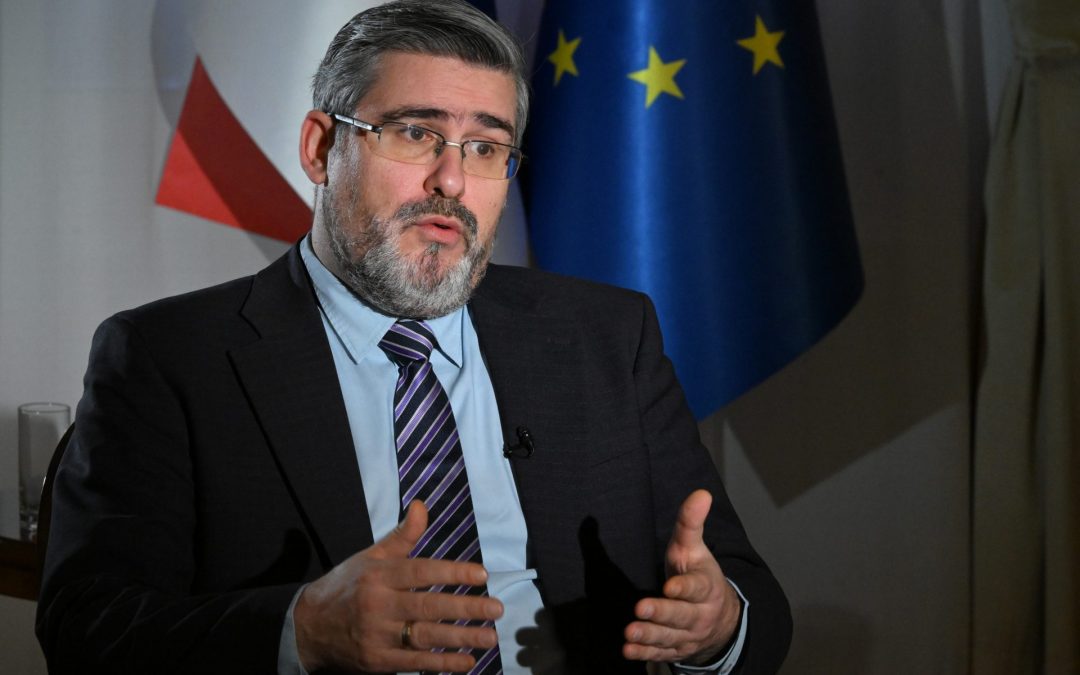
BELGRADE – The Minister for European Integration Nemanja Starović expressed his conviction that 2026 will be a good year for Serbia’s European integration and that the political deadlock caused by the non-opening of cluster three will be overcome, assessing that the best solution would be to consider the accession of the entire Western Balkans region to membership. “On January 1, the Republic of Cyprus began its presidency of the Council of the European Union. Cyprus is very well-disposed toward us, a friendly, I dare say, and brotherly country, and I believe it will give an additional tone and impulse so that this formal political deadlock can be overcome,” Starović said in an interview with Tanjug.
He assessed that the process of Serbia’s European integration is proceeding in a very dynamic way and added that Serbia continues to do its job and to communicate and cooperate with the European Commission on a daily basis. “I believe that this year 2026 will be a very good year for Serbia both when we talk about our economic development and when we talk about the process of Serbia’s integration into the EU,” Starović said. Asked whether there is political will to resolve internal problems that are often mentioned as an obstacle to opening cluster 3, Starović replied that the political will exists and that Serbia is implementing everything that constitutes its obligations or tasks in the process of EU integration. “When we talk about chapter 35, into which the dialogue between Belgrade and Priština has been loaded, it represents a specific suspensive mechanism in our accession process, which no other candidate for EU membership has. However, I think that awareness has matured among all key decision-makers that the Priština side is the one responsible for the lack of progress in the dialogue process, that the responsibility does not lie with the Republic of Serbia, that we have been the side that has always been ready and willing for dialogue,” Starović said. He added that Belgrade made some important steps in the previous year toward pacifying relations with Priština, among them the call to Serbs to participate in local and provincial elections, and that now, as he says, the ball is in Priština’s court.
He said that we will work hard in order to implement all items from our reform agenda within the set deadlines and added that the Government this year continues to implement the national program for the adoption of the EU acquis, adding that it has been set in a very ambitious way. “In parallel with that, we are implementing our reform agenda through which we are unlocking financial tranches from the EU Growth Plan for the Western Balkans. We are creating preconditions, looking beyond the framework of cluster 3 itself, for opening cluster number 2, for opening cluster number 5, but also for reaching those necessary interim benchmarks in chapters 23 and 24, which is actually necessary so that we can gain the opportunity to start closing those chapters that have in the meantime been opened in previous years,” Starović told Tanjug. He added that work is also being done on programs that gradually integrate Serbia into the single European market. “Here I mean the full operational implementation of SEPA mechanisms, because Serbia was granted access to the Single Euro Payments Area back in May last year and by the end of the first half of this year we will have full operational implementation. A very important process for us is our country’s entry into the EU roaming-free zone, so that those very high tariffs for the use of mobile phones and mobile internet within the EU for our citizens can finally be abolished,” Starović said.
Asked when Serbia can expect the payment of the first tranches from the Growth Plan, the minister replied that during 2025 the state received a pre-financing payment in the amount of 7 percent, that is, 111 million euros. “Not all partners from the Western Balkans have by that moment received financing funds. Likewise, in 2025 we submitted two requests for the payment of funds, that is, for the first and second tranche. In January of this year, a request is being submitted for the payment of the third tranche and according to the latest information we are receiving from the European Commission, procedures have been initiated for the payment of that first tranche in the amount of 68 million euros, which we are certainly eagerly awaiting,” Starović said. Unlike some partners from the Western Balkans, he added, not a single tranche has so far been revoked for Serbia, that is, there has been no reduction of the funds available to it due to possible delays. Asked whether he believes that the absence of a Serbian representative from the last EU–Western Balkans summit in Brussels will negatively affect the assessment of European integration, Starović replied that he does not think there will be negative consequences of that kind. “That was a necessary move by Serbia, since the Council of the European Union, with the repeated lack of political consensus of all 27 member states for opening cluster number 3, sent a very bad message to the citizens of Serbia,” Statović said.
He added that such a bad political message required a serious political response. “When we talk about that bad message, if for five years in a row you have a recommendation from the European Commission, which is the only competent one, which alone has the apparatus and mechanisms for a substantive assessment of whether Serbia has implemented all the necessary reforms to reach the opening of cluster 3, and then despite that renewed positive recommendation, the opening of cluster 3 does not happen – this sends a message that on the one hand discourages all those key bearers of reform processes in Serbia, and on the other hand gives the best gift to all opponents of the idea of Serbia’s integration into the EU, both domestically and internationally,” Starović said.
The minister also assessed that an important step was made in the past year toward raising the rate of alignment with European foreign policy and stated that this was recognized in the European Commission’s annual report, which identified that Serbia raised its alignment rate from 51 percent to 63 percent. “It is our obligation to do this in a gradual way until the moment, that is, the day when we become a full member of the EU, when we get a seat at that table where decisions are made, and from that moment we are obliged to be one hundred percent aligned. At this moment that is not possible, although there are certain strong expectations of some member states that this should already be the case,” Starović said. Asked what he thinks about the proposal of President Aleksandar Vučić that the entire Western Balkans region be admitted to the EU together, Starović replied that it is very reasonable, rational and achievable. “Although there is no such kind of political will at this moment to seriously consider and accept such a realistic and well-intentioned initiative, I believe that time will show, the months and perhaps years ahead of us, that this is actually the only realistically achievable solution, whether we look at it from the angle of politics or from the technical and procedural angle,” Starović said. Taking into account the demanding procedures in the final phase of the EU enlargement process, he added, the most optimal thing would be to consider the group accession of the entire Western Balkans region to EU membership and in that way avoid the creation or strengthening of existing borders within the region and contribute to the much-needed peace and stability, and thus to progress.
He also assessed that sooner or later many will come to the positions currently held by the president of Serbia. Asked whether there will be EU enlargement by the end of the mandate of the President of the European Commission Ursula von der Leyen, the minister replied that in Brussels itself, as well as in the key capitals of EU member states, there is an active debate on the enlargement process, that is, the need to restructure the process itself. “There is also talk of some possible different forms of membership with fewer rights and fewer obligations, with the abolition of the right of veto for new members and so on. What is indisputable is that there is political will for enlargement to take place in the next few years, but whether this will be feasible in practice, I think no one can yet say with certainty,” Starović assessed. (January 3)