
 go to the original language article
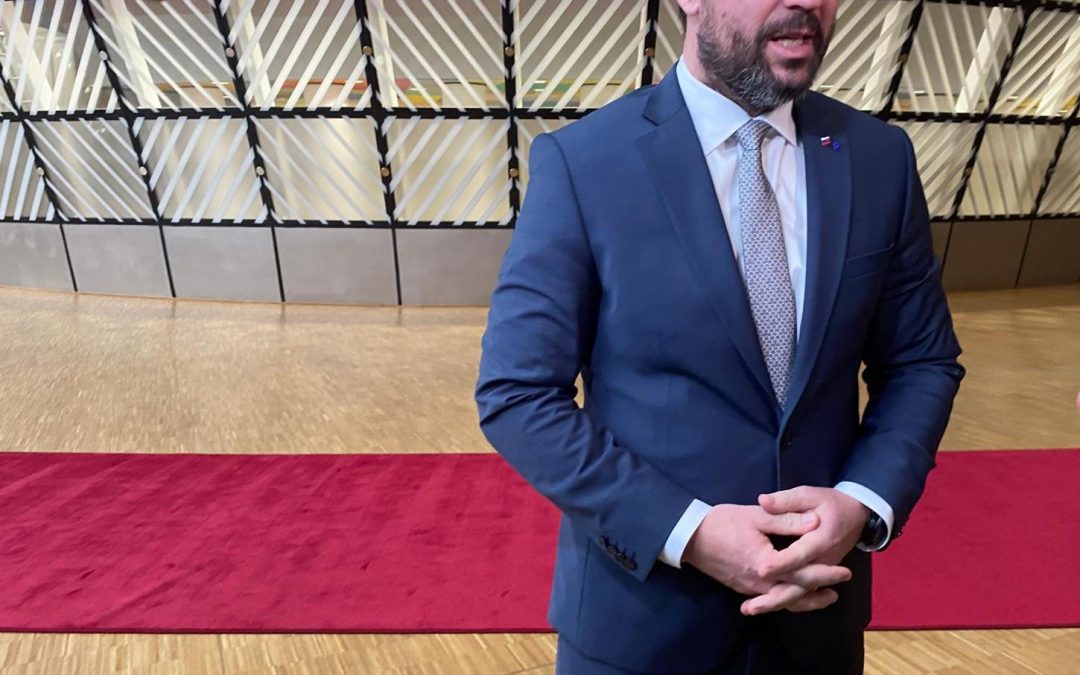
Brussels – The European Commission (EC) must respond to the pressure exerted on it by the member states of the European Union (EU) and by European farmers and their trade unions in connection with the financing of the Common Agricultural Policy. Minister of Agriculture Richard Takáč (Smer-SD) stated this on Thursday in Brussels after the first day of negotiations at the EU Council for Agriculture and Fisheries, the TASR correspondent reports.
Richard Takáč specified that the most important item on the agenda was the Common Agricultural Policy and its future after 2027.
“I can say that there is still pressure from individual countries for this to be changed in such a way,” he said, referring to the original EC proposals on the form and financing of the common agricultural policy. “Ministers do not agree, for example, that all funds should be merged into one super-fund. They want the Common Agricultural Policy to remain separate, to remain preserved as unified and not merged. The foundations of the EU in the agricultural sector were built on this,” he explained.
If there is no money for the agricultural sector, we will not be self-sufficient and secure in food
Takáč emphasized that from the point of view of food self-sufficiency and security, the priority for the EU must be to preserve the two-pillar structure of agricultural policy, which is related to having sufficient financial resources. “If we do not provide money for the agricultural sector, we will not be self-sufficient and secure in food,” he pointed out.
The minister recalled that two weeks ago the European Commissioner for Agriculture Christophe Hansen visited Slovakia, where he also said that “the change in the allocation of that 10% from the long-term budget for rural areas as such has been approved.” He added that in this case there are still many question marks and ambiguities, because it is not known how much of this will actually go to the agricultural sector.
“In rural areas you can finance absolutely everything, through local governments and completely different types of projects that will not be related to agriculture. All member states are pushing for there to be enough money for the agri-sector. When the EU has almost doubled its budget, it cannot say that the agricultural sector will receive less money,” he warned.
Takáč claims that the EC is beginning to feel this pressure and he believes that every activity in this direction is meaningful, that it is necessary to communicate and try to explain, also using examples from individual countries, why the proposal submitted by the EC in the summer is not good.
The chairman of the European farmers’ confederation COPA – COGECA was also present at the Council of Ministers; next week it is preparing a several-thousand-strong demonstration in Brussels against the form of agricultural policy as proposed by the European Commission. “I fully support the protests that will take place next week,” Takáč said after a bilateral meeting with representatives of COPA – COGECA. (11 December)