
 go to the original language article
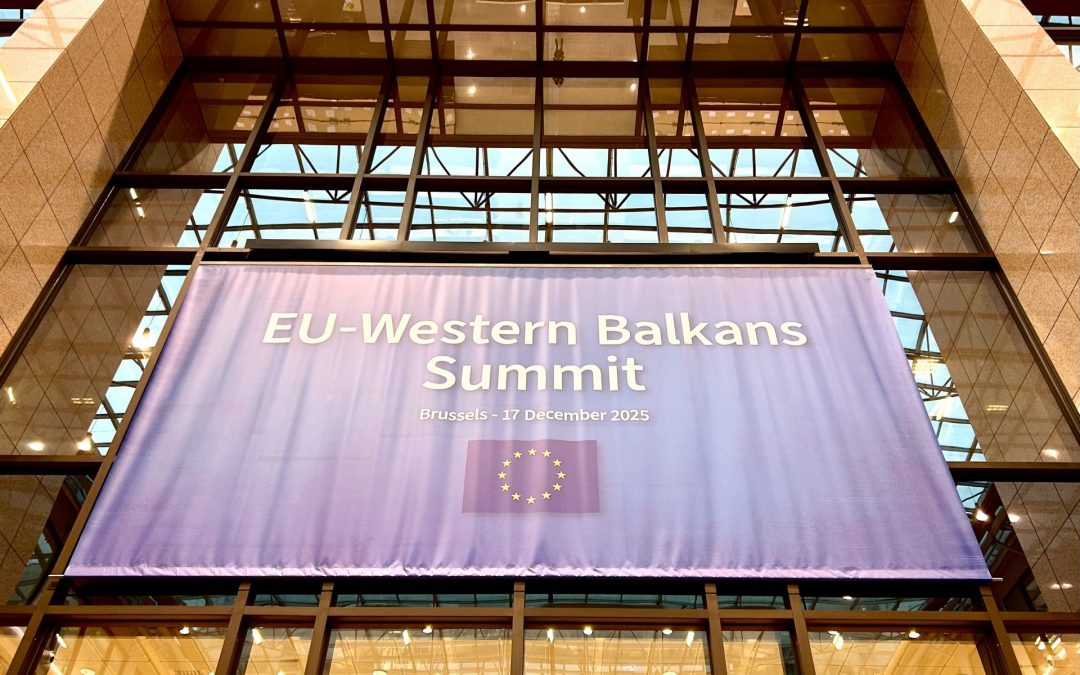
BRUSSELS – Maintaining good-neighbourly relations, regional cooperation and reconciliation remains key to building a shared future, including through the good-faith implementation of international agreements such as the Prespa Agreement with Greece and the Treaty of Friendship, Good-Neighbourliness and Cooperation with Bulgaria. This is stated in a declaration adopted by the heads of state and government of the EU countries after a joint meeting with their colleagues from the Western Balkans.
Decisive additional efforts are needed to promote reconciliation and regional stability, to find and implement final, inclusive and binding solutions to regional and bilateral disputes and issues with partners related to the legacy of the past, in accordance with international law and established principles, including the Agreement on Succession Issues, and the remaining cases of missing persons and war crimes, the document states.
The war waged by Russia against Ukraine and the growing geopolitical challenges highlight the need for ever stronger ties between the EU and the Western Balkans. We reaffirm our full commitment to the EU membership perspective of the Western Balkans. Enlargement is a realistic possibility, the leaders state.
In a statement by the President of the European Council, Antonio Costa it is noted that good progress has been made over the past 12 months on the Western Balkans’ path towards the EU.
He welcomes the steps taken by the Republic of North Macedonia to improve regional connectivity and expresses hope for real progress in 2026.
We have no unresolved issues with the Republic of North Macedonia (RNM), said the Bulgarian caretaker Prime Minister Rossen Zhelyazkov to Bulgarian journalists in Brussels after the annual EU-Western Balkans meeting.
Our position has always been principled – we do not conduct any disputes with RNM on issues related to the so-called compromise of July 2022, this is already a pan-European position, said Prime Minister Zhelyazkov.
In 2022, the so-called French proposal was adopted, obliging Skopje to include Bulgarians in its constitution as a constituent nation, which has not yet been implemented.
Our position as a member state is that every candidate country for EU membership, on the basis of its own merits, should be assessed for its progress, and not by an individual member state, Zhelyazkov added.
We believe that the assessment of the progress on opening cluster 1, which is related to the negotiating framework, shows some hesitation on the part of our colleagues in Skopje, but this is not an issue on which we give our opinion and position, the Bulgarian Prime Minister further stated. (17.12.2025)