
The mass arrival of migrants in the Spanish exclave of Ceuta in July sparked a debate about the role of the European Border and Coast Guard Agency’s (Frontex) role in future crisis situations.
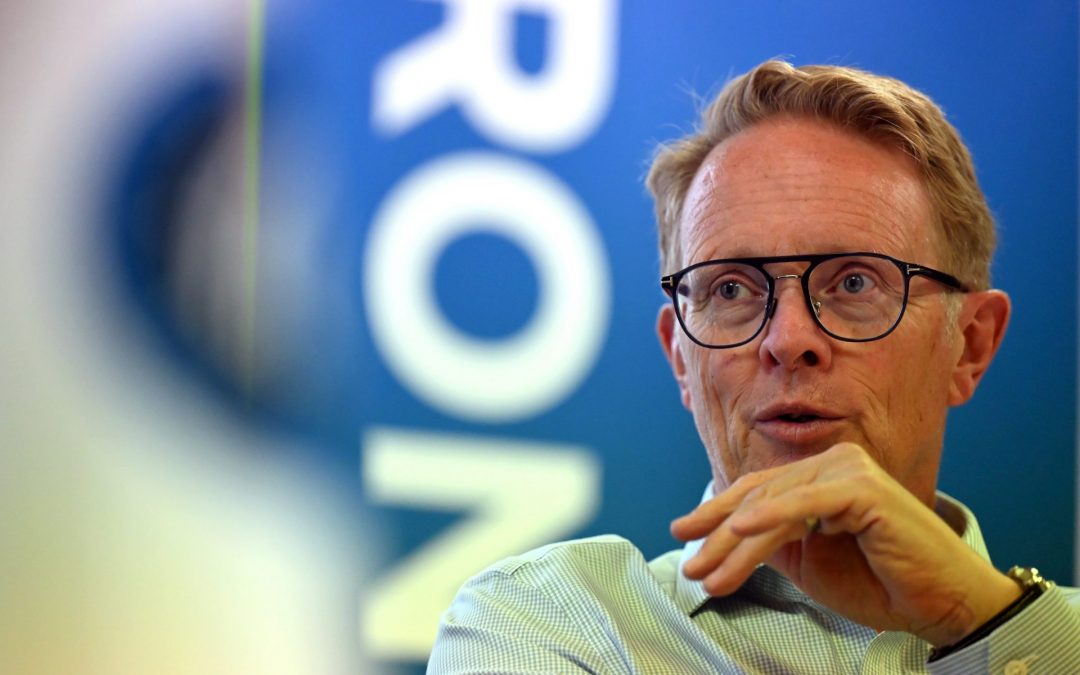
In an interview with the European Newsroom (enr), Frontex Executive Director Hans Leijtens said the European Union should improve its “situational awareness” and better connect early warning systems at the bloc’s external borders.
The European Commission this week proposed a new mandate for Frontex that includes setting up a rapid-response team that can deploy within 24 hours.
In addition, a senior EU lawmaker called for Frontex to take operational command in such situations. Leijtens rejected the idea, arguing that responsibility for protecting the EU’s external borders should remain with member states.
Leijtens also addressed pressure on the EU’s eastern borders amid Russia’s ongoing war of aggression against Ukraine. He said the issue was not just about migration, but reflected the close links between defence, security, border management and migration.
The Frontex chief also highlighted the drop in irregular migration through the Western Balkans, and called upon EU candidate countries in the region to complete the necessary reforms for membership. “They know that if they want to join the Union, one chapter will be about border management, so why not tick the boxes now,” he said.
The interview was conducted by journalists from European Newsroom partner agencies dpa (Germany), CTK (Czech Republic), and PAP (Poland) on behalf of the entire network.
Read some of our network’s coverage here:
- European Newsroom (enr): Frontex chief calls for better EU border intelligence after Ceuta crisis
- dpa (Germany): Frontex chief draws lessons from migration crisis in Ceuta
- CTK (Czech Republic): Frontex chief: The EU must identify developments at its external borders in good time
- PAP (Poland): “It’s no longer just a question of migration.” The head of Frontex on the eastern border
- Tanjug (Serbia): Leijtens: Frontex is aligned with the Western Balkan countries; cooperation is fruitful and positive