
 Have the article read by OpenAI (Beta). Please note that AI translations may take some time to process.
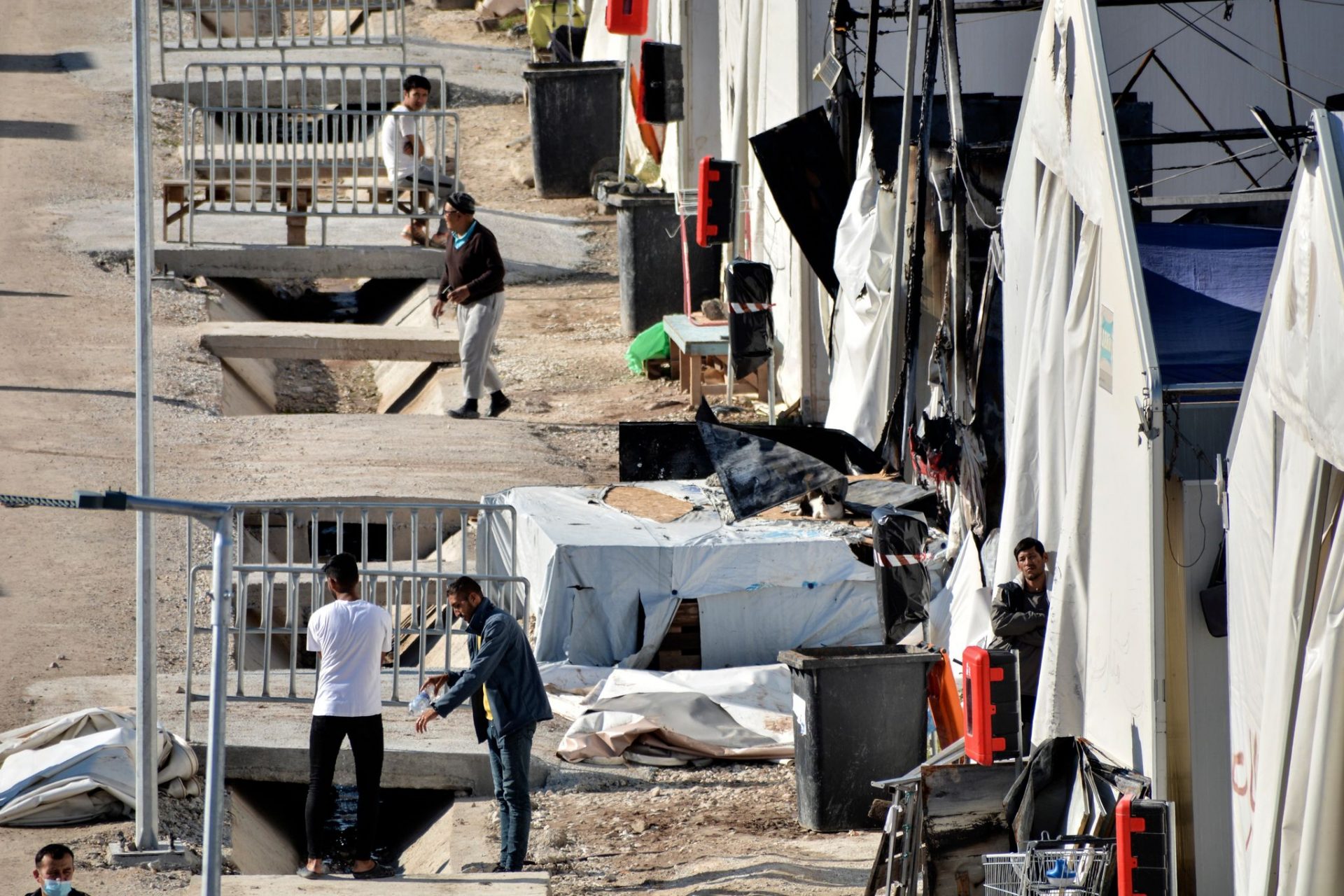
EU countries on Monday backed a significant tightening of Europe’s immigration policy, including endorsing the concept of setting up “return hubs” outside the 27-nation bloc for asylum-seekers who are without the right to stay.
Interior ministers meeting in Brussels greenlighted a package of measures, as European governments are under pressure to take a tougher stance amid a souring of public opinion on migration that has fuelled far-right gains at the ballot box.
A decline in irregular entries to Europe – down by around 20 percent in the first half of 2025, according to the EU’s border management agency Frontex – has not eased the pressure to act on the hot-button issue.
“We have to speed up,” said EU Migration Commissioner Magnus Brunner, “to give the people the feeling that we have control over what is happening.”
“Three in four irregular migrants who have been issued a return decision in the EU, continue to stay here instead of returning home,” said Danish Immigration Minister Rasmus Stoklund, who chaired the talks. “I believe the new set of rules significantly can help improve these numbers,” he added.
The agreement was made in the framework of the EU’s Migration and Asylum Pact, which was approved last year and will enter into force in June 2026. It is intended to enable a better management of migration, more effective controls and faster returns of failed asylum seekers.
The new initiatives have caused distress among activists working with migrants. More than 200 organisations had already criticised the European Commission’s plans in advance.
“Instead of investing in safety, protection, and inclusion, the EU is choosing policies that will push more people into danger and legal limbo,” said Silvia Carta of PICUM, an NGO that helps undocumented migrants. Olivia Sundberg Diez of Amnesty International described the agreed positions as “dehumanising” and the concept of return hubs as “cruel and unworkable”.
Tougher rules
The stricter rules now backed by the member states would notably allow:
- The opening of centres outside the European Union’s borders to which migrants whose asylum applications have been rejected would be sent – the so-called “return hubs”.
- Harsher penalties for migrants who refuse to leave European territory, including through longer periods of detention.
- Sending migrants to countries that are not their countries of origin, but which Europe considers “safe”.
EU ministers agreed to designate Kosovo, Bangladesh, Colombia, Egypt, India, Morocco, and Tunisia as safe countries of origin throughout the EU.
All EU accession candidates also generally meet the criteria for classification as safe countries of origin. However, there are exceptions, such as when a country is at war – as is currently the case for Ukraine – or when sanctions are imposed on the country by the EU member states.
EU member states also agreed on changes to the concept for safe third countries. Contrary to previously agreed rules, a direct link between the applicant and the safe third country in question will no longer be required.
A third country is now considered safe when there’s an agreement concluded with a nation that respects international human rights standards and principles of international law. This is intended to relieve the burden on the European asylum system by deporting people to non-EU countries where they can apply for protection.
EU member states also agreed on the figures for the 2026 solidarity pool. It aims to distribute asylum seekers more fairly among EU member states in the future with the objective of relieving the burden on particularly affected countries.
The solidarity pool requires EU member states to accept migrants being relocated to their country, contribute financially, or provide operational support. For 2026, the figures have been set at 21,000 relocations or 420 million Euro in financial contribution.
The European Commission has found Cyprus, Greece, Italy and Spain are under migratory pressure. These countries can benefit from the solidarity measures, and may be exempt from contributing to the solidarity pool.
The European Commission has also classified Austria, Bulgaria, Croatia, the Czech Republic, Estonia and Poland as facing significant migratory pressure due to cumulative flows in previous years. These countries may request a full or partial deduction from their mandatory contribution to the solidarity pool.
The Permanent Representation of the Czech Republic to the EU, for example, announced on the social media platform X on Monday that the country is exempted from contributions to the solidarity pool for 2026 because of a high number of refugees from Ukraine it has accepted.
The Chair of the State Agency for Refugees of Bulgaria, Ivan Ivanov, also said that his country has provided temporary protection to more than 221,000 Ukrainian citizens who remain in the country – but noted that there is no increased migratory pressure and no more than 20 percent of refugee centres are currently occupied.
Some countries have already signalled their readiness to contribute to the solidarity mechanism. On Monday Interior Ministry State Secretary Tina Heferle for example said Slovenia will contribute its fair share to the solidarity pool. She could however not give any detailed figures, as the documents are classified.
Italy-Albania migrant centres deal makes headway
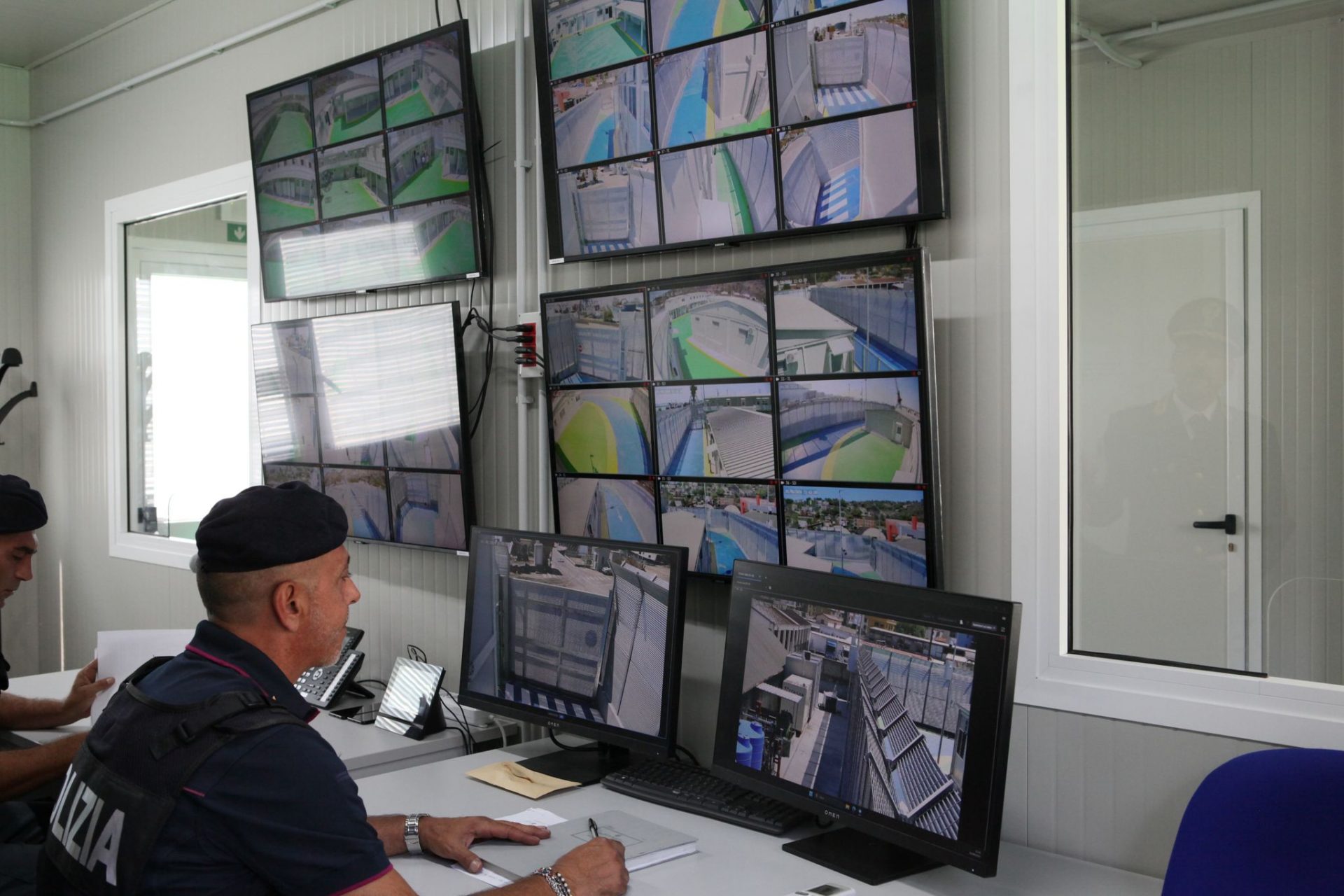
The details of the new rules are to be finalised in negotiations with the European Parliament. If approved, they would make it possible for countries to set up repatriation centres outside the European Union. One such centre is already being prepared in EU candidate country Albania as part of a deal with Italy.
Italy’s right-wing government hopes that EU plans will present a new opportunity for its controversial offshore migration facilities. Interior Minister Matteo Piantedosi has told the ll Messaggero newspaper that the reception centre in the port city of Shëngjin and the deportation centre in Gjadër should be “fully operational” by mid-2026.
The green light for “return hubs” was much to the satisfaction of Piantedosi. “It is an agreement that we value greatly, and Italy has played an important role,” he said.
Italy established the facilities in 2023. The plan was to use the camps to process the asylum claims of migrants who were picked up in the Mediterranean by the Italian coastguard.
If their claims are accepted, people would be allowed to travel on to Italy, while those who were rejected would be sent back to countries deemed safe. However, the process has suffered a series of legal defeats in Italian and European courts, meaning the facilities have remained largely empty.
Contributors and beneficiaries
Some in the bloc have voiced strong scepticism to the new rules agreed on Monday.
Hungary will not implement the agreed solidarity mechanism and will accept “not a single migrant”, a senior government official said on Wednesday, according to Hungarian media. Hungarian Prime Minister Viktor Orbán has been at odds with the European Commission for years over his restrictive asylum policies.
Slovak Interior Minister Matúš Šutaj Eštok also said that his country rejected the mandatory solidarity mechanism in the redistribution of asylum seekers. The country should have an exemption due to the tens of thousands of refugees from Ukraine that it accepted after the outbreak of the war, the Slovak news agency TASR quoted him as saying.
The incoming Czech government of the ANO, Freedom and Direct Democracy (SPD) and Motorist parties plans to reject the EU migration pact. “We will introduce a zero tolerance policy towards illegal migration. We will reject the EU migration pact and adopt a new law on migration and asylum,” the coalition’s draft policy statement read.
EU member states decide on immigration and asylum policy by Qualified Majority Voting (QMV) in the Council of the EU. 55 percent of EU countries representing 65 percent of the EU’s population need to vote in favour for new rules to pass.
Other countries broadly back the new rules, but highlight areas that may require adjustments.
France on its part questioned the legality and effectiveness of some of the proposals.
Poland sought to expand the list of safe countries of origin “in order to reduce emigration pressure on the EU”, said Deputy Interior Minister Maciej Duszczyk on Monday.
Following an interior ministers meeting in Brussels, German Interior Minister Alexander Dobrindt said Germany would not take in any additional asylum seekers and would also not provide financial aid.
However, according to an EU Commission analysis, Germany can argue that it is already taking care of a large number of asylum seekers for whom other EU states would actually be responsible under Dublin rules. The Dublin Regulation states that the first EU country an asylum seeker enters is generally responsible for processing their asylum application.
According to the EU Asylum Agency, the German authorities received 70,000 applications from new arrivals in the first half of the year. This puts Germany in third place within the EU behind France (78,000) and Spain (77,000).
In the process of the new rules being finalised by the European Parliament, no major changes are expected.
This article is an ENR Key Story. The content is based on information published by ENR participating agencies.