
 go to the original language article
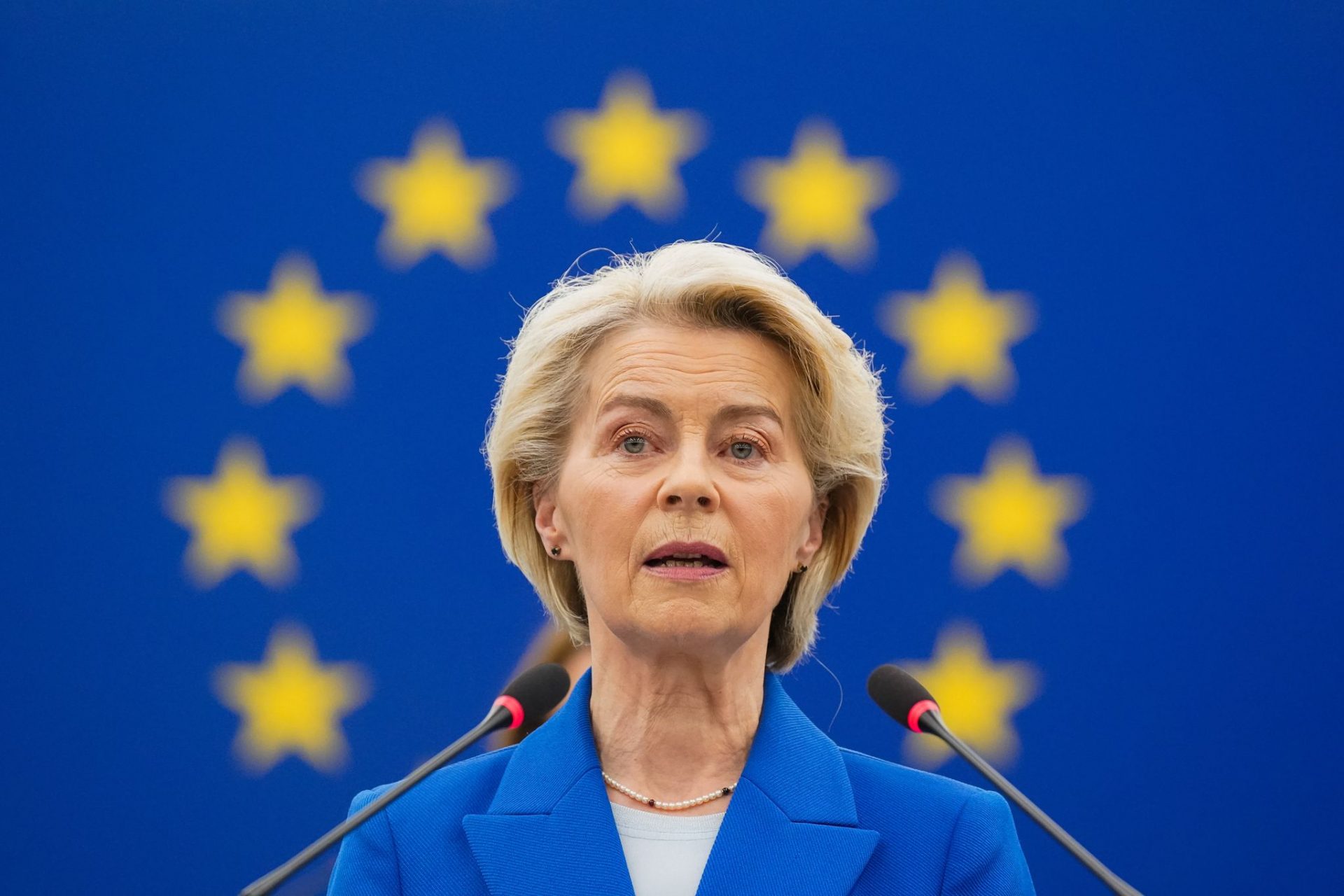
Warning that any possible escalation of tensions between Europe and the United States over Greenland “would only encourage our opponents,” was issued by the President of the European Commission Ursula von der Leyen, speaking today at the Plenary of the European Parliament in Strasbourg.
Von der Leyen underlined that the European Union “agrees with its American friends” on the importance of security in the Arctic and that this cooperation is already being implemented within the framework of NATO. In this context, she described as “wrong” the proposals for imposing additional tariffs, warning that “a dangerous downward spiral between allies would only encourage our opponents, whom we seek to keep away from our strategic environment.”
At the same time, she stressed that “Europe prefers dialogue and solutions,” while signaling that the EU is “fully prepared to act with unity and determination, if necessary.”
Seismic and permanent shift in the international order
In her speech, the President of the Commission spoke of events that “have shaken the world” in recent times, which reflect a profound “shift in the international order,” which is not only “seismic” but also “permanent.” “The speed of change far exceeds anything we have seen in decades. We now live in a world defined by raw power – economic, military, technological or geopolitical,” she noted.
Antonio Costa: A Europe of principles, protection and prosperity
Taking the floor, the President of the European Council Antonio Costa acknowledged that “the geopolitical challenges facing Europe sometimes seem frightening,” referring in particular to Russia’s war against Ukraine, the undermining of the rules-based international order and the questioning of key alliances.
However, he expressed certainty that “the European Union will emerge from this period stronger, more resilient and more sovereign.” As he stressed, the European response must be based on three pillars: “a Europe of principles, protection and prosperity” – dimensions which, as he said, are being particularly tested today in transatlantic relations.
Antonio Costa explained that his decision to convene a meeting of European leaders tomorrow on transatlantic relations is based on a series of common positions of the member states. Among them:
– commitment to international law, territorial integrity and national sovereignty
– full support and solidarity with the Kingdom of Denmark and Greenland, with a clear position that only they can decide on their future
– recognition of the common transatlantic interest in peace and security in the Arctic, especially through NATO
– opposition to further tariffs, which would undermine transatlantic relations and would be incompatible with the EU-US agreement
– the EU’s readiness to defend its member states, citizens and businesses from any form of coercion
– and, finally, the will to continue constructive cooperation with the United States on all issues of common interest.
“These are the principles that must guide our leaders’ discussions tomorrow, as well as our future actions,” concluded the President of the European Council. (21/01/26)