
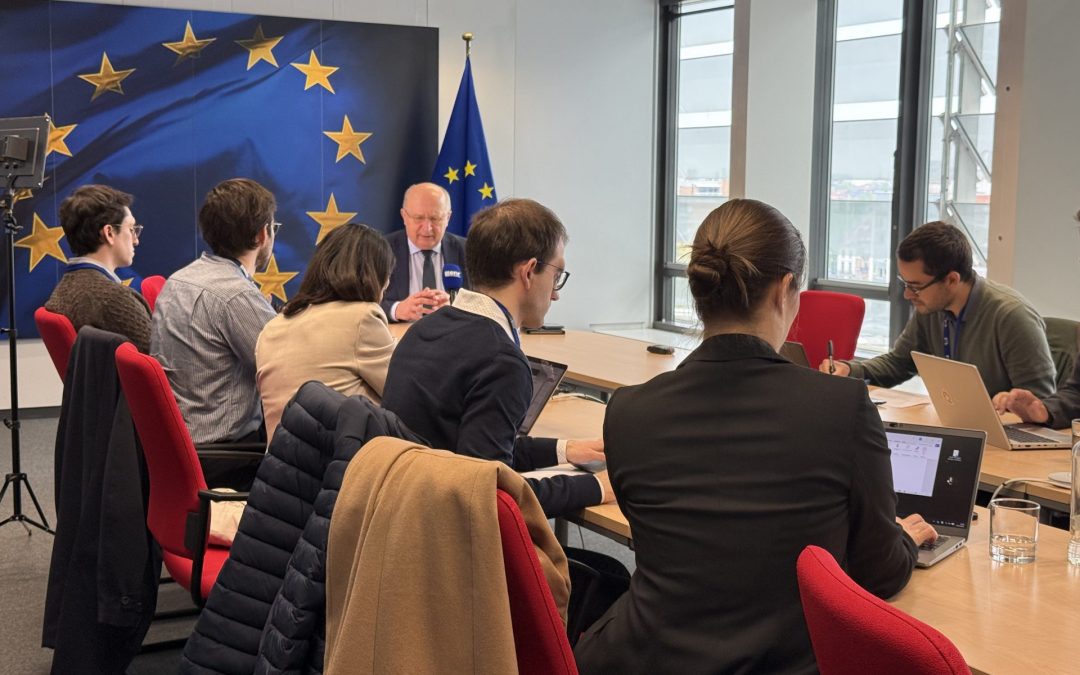
The EU has a defence clause. But does it have a plan? That was among the questions raised during an interview with Andrius Kubilius, European Commissioner for Defence and Space, for the European Newsroom (enr) in Brussels.
Kubilius urged the European Union to strengthen its domestic defence capabilities and reduce reliance on external suppliers – particularly the United States – for critical military equipment and technologies.
He also cautioned that the EU prepare for a potential reduction of US military presence in Europe, underscoring the urgency of building greater strategic autonomy. At the same time, the former Lithuanian prime minister warned that Washington may struggle to sustain its level of military support for Kyiv, as global attention is shifting from Russia’s war against Ukraine to the war in Iran.
The EU defence chief also called for a stronger role of the EU’s mutual defence clause – known as Article 42.7 of the Treaty on European Union – which stipulates that when activated by an attacked EU country, all other member states must respond to provide assistance. According to Kubilius, the bloc needs a “playbook” to make the clause more workable and effective in practice.
The Commissioner also acknowledged the importance of EU enlargement as a strategic investment in Europe’s security and defence. Recalling the example of his home country Lithuania, which became an EU member state in 2004, he said that joining the EU enables economic and social development, prosperity, and stability, which he considered essential for the future of European defence.
The interview was conducted by journalists from European Newsroom partner agencies dpa (Germany), ANSA (Italy), EFE, Europa Press (both Spain), Lusa (Portugal), and STA (Slovenia.) Audiovisual support was provided by TotalEU Production.
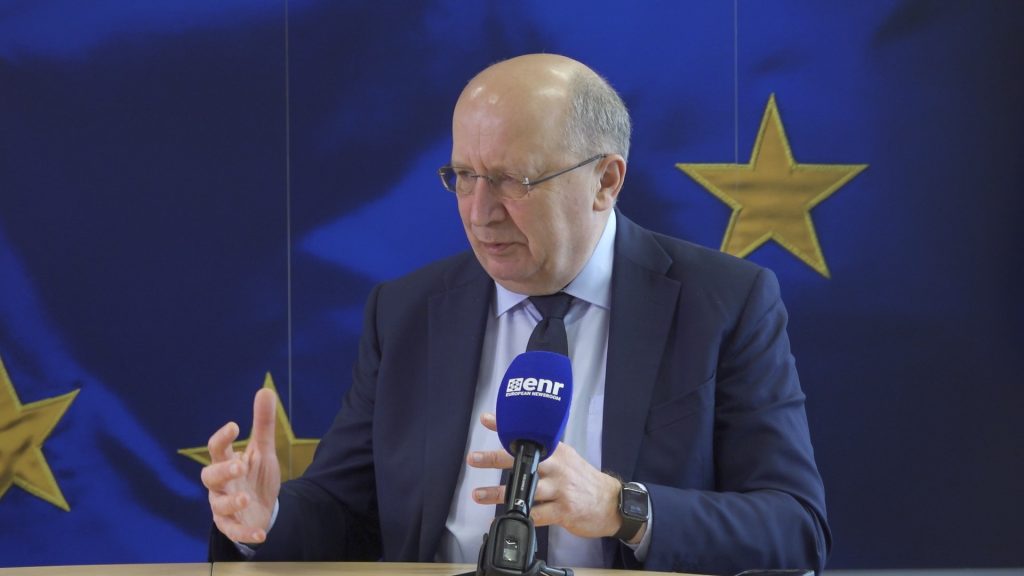
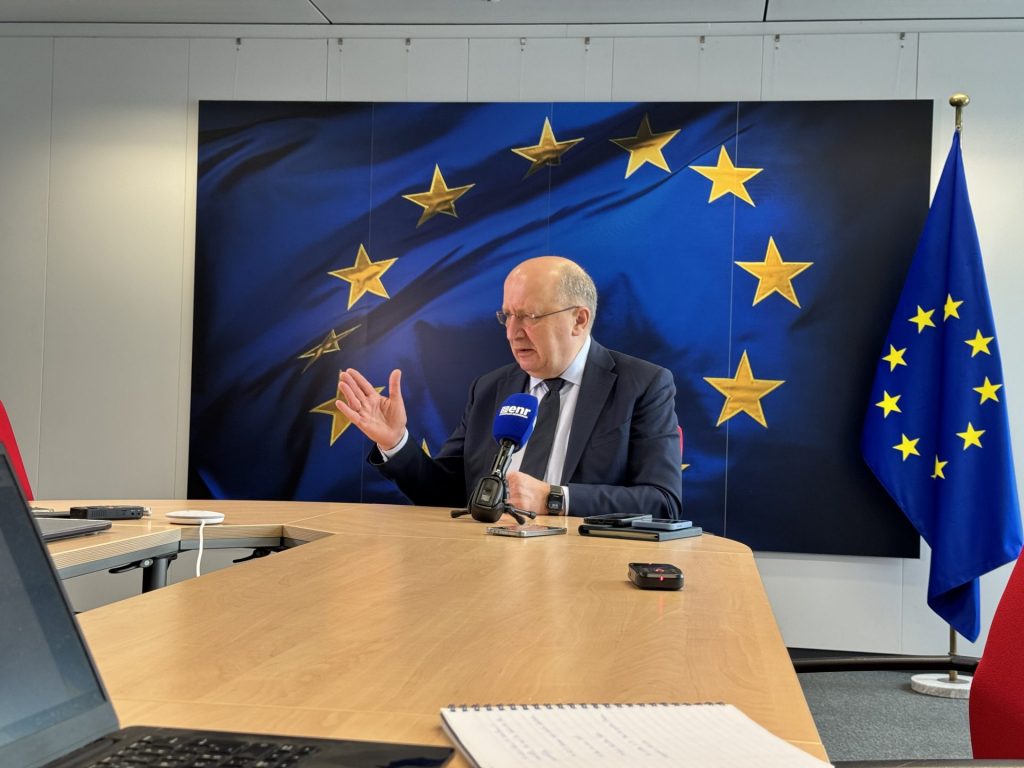
More impressions from the interview. Photos: ANSA/European Newsroom (left) / Iván Zambrano/Europa Press (right)